
The Best Greek Mythology Themed Gifts
Greek mythology gifts for fans of Zeus, Athena, Poseidon, Hades and the ancient Greek gods. Explore mythology-inspired shirts, mugs, journals, bottles and more.
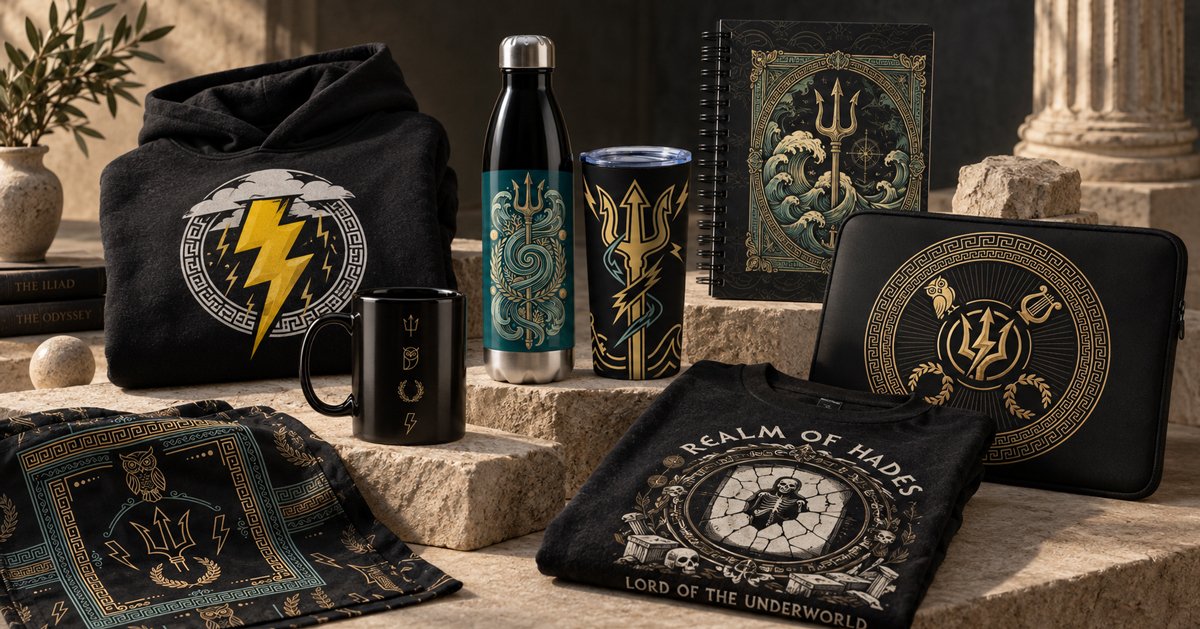
Greek mythology has never really been just about gods. It's been about what we project onto them: ambition, wisdom, rage, grief, the ocean's indifference. These stories have survived for thousands of years partly because the questions they raise still feel familiar.
This collection draws on some of the most recognizable figures in the Greek pantheon, including Hades, Athena, Zeus, and Poseidon. Their stories, symbols, and attributes give the designs plenty to work with, from lightning bolts and owls to tridents, laurel wreaths, and the darker imagery of the underworld.
The collection spans T-shirts, hoodies, notebooks, water bottles, mugs, glassware, and other everyday pieces. Nothing is meant to feel like a costume. The references are there for people who catch them, with designs that treat Greek mythology less as fantasy decoration and more as a cultural tradition that has managed to remain remarkably recognizable.
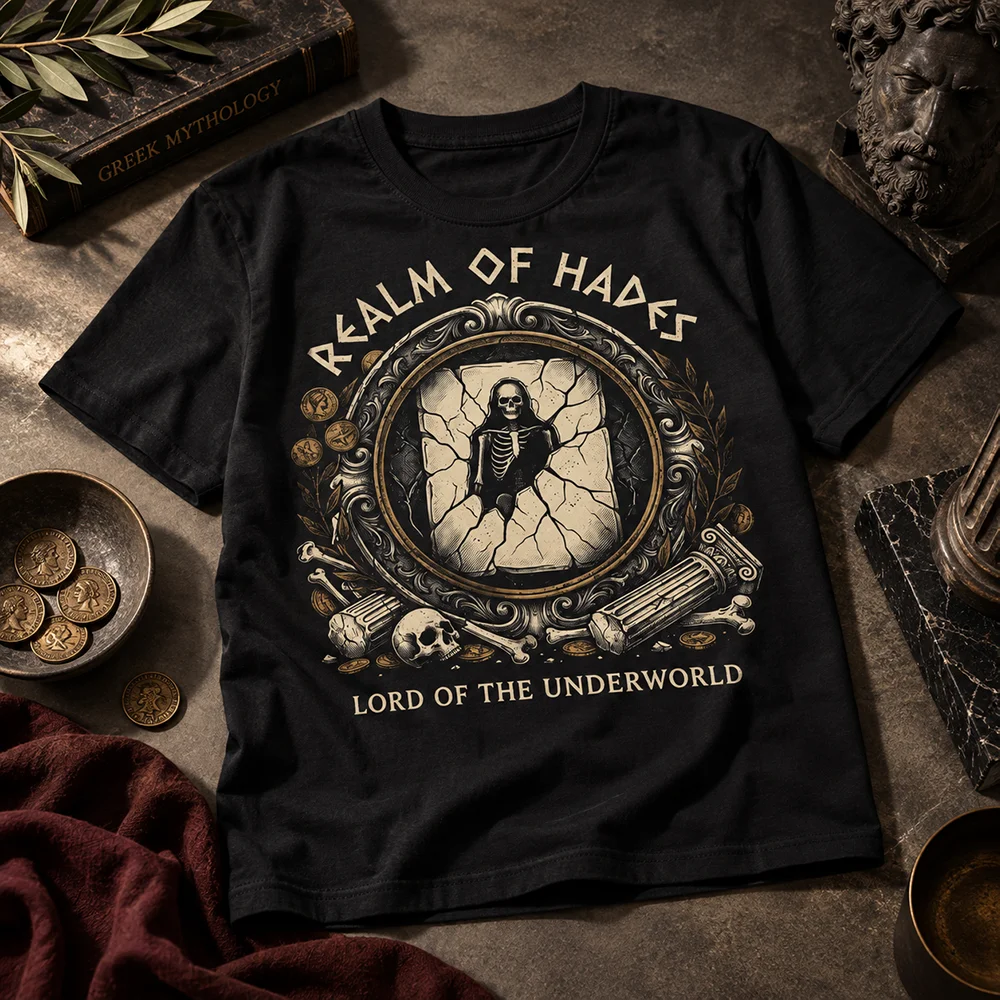
Hades Inspired T-Shirt
A striking choice for anyone who has a particular fascination with the darker side of Greek mythology. The design draws on Hades and the Greek underworld, with a crowned skeleton surrounded by ancient columns, coins, laurel leaves, and other classical details. The old-world illustration style gives it more of an engraved, mythological feel than a typical character graphic.
It makes a great gift for someone who loves Greek mythology, the Greek gods, or stories about the underworld. Especially fitting for Hades fans, mythology readers, classics students, or anyone who has always found the gods with complicated jobs a little more interesting.
More Greek God & Mythology Inspired T-Shirts
If they have a favorite Greek god, there are a few more designs worth a look. These take different approaches to Greek mythology, from the thunder and authority of Zeus to Athena’s connection with wisdom and strategy and Poseidon’s command of the sea.
Zeus Thunder T-Shirt
A bold Greek mythology shirt inspired by Zeus, with a lightning bolt, storm clouds, eagle, and classical Greek details. The design leans into the power and authority associated with the king of the gods, making it a fitting gift for a Zeus fan or anyone drawn to the more dramatic side of Greek mythology.
Athena Greek Mythology T-Shirt
For someone whose idea of a Greek god is less thunderbolt and more wisdom, strategy, and careful planning. Athena’s profile sits at the center, surrounded by her owl, laurel, spears, and classical Greek motifs. A thoughtful choice for an Athena fan, mythology enthusiast, or anyone interested in the symbolism behind the ancient gods.
Poseidon Ruler of the Seas Vintage T-Shirt
Poseidon gets the full treatment here, with crashing waves, his trident, nautical details, and a richly illustrated vintage design. It makes a particularly good gift for someone fascinated by Greek mythology and the gods of Olympus, especially if their interests tend to run toward the sea rather than the sky
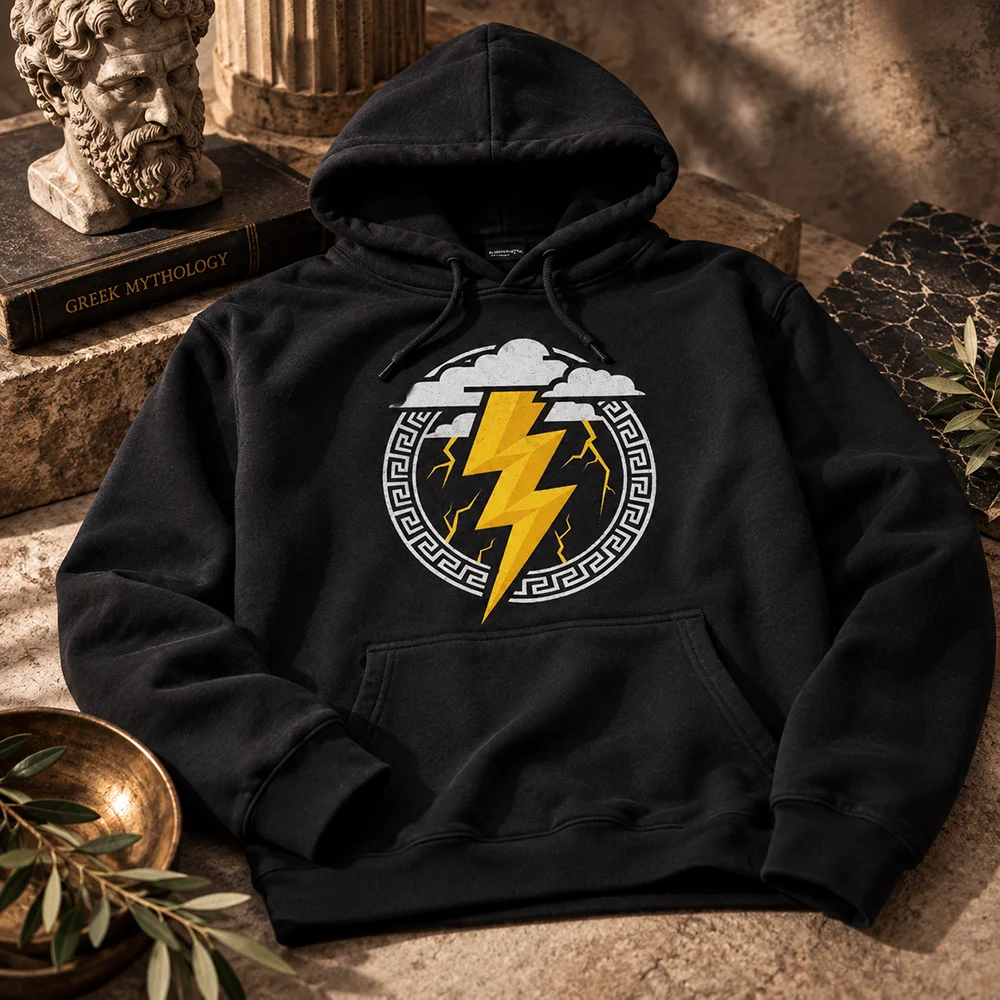
Zeus Lightning Oversized Hoodie
A bold choice for anyone who has a particular fondness for Zeus and the more dramatic side of Greek mythology. The design centers on a golden lightning bolt surrounded by storm clouds, Greek key detailing, and smaller flashes of lightning, giving the hoodie a strong connection to the king of the gods without turning it into a costume.
It makes a great gift for a Greek mythology fan, a Zeus devotee, or anyone fascinated by the gods of Olympus. The black hoodie keeps the design wearable, while the bright lightning motif gives it just enough presence to stand out.
More Greek Mythology Hoodies
For someone who would rather wear their favorite Greek god than settle for a small souvenir. These hoodies take a different approach to mythology, from Athena’s owl and spear to Poseidon’s trident and waves and Hades’ darker, flame-wrapped design.
Athena Owl Hoodie
A thoughtful choice for an Athena fan, with the owl, laurel wreath, and vertical spear drawing on the goddess’s associations with wisdom, strategy, and war. The simple gold-on-black treatment keeps the mythology recognizable without making the design feel overly busy.
Poseidon’s Crest Oversized Hoodie
For the person whose Greek mythology interests run toward the sea. A trident rises through stylized waves inside a clean circular crest, giving the hoodie a strong Poseidon connection without leaning too heavily into the usual fantasy aesthetic. The oversized fit makes it an especially easy piece to wear every day.
Hades Trident Flame Hoodie
This one takes a considerably darker route. The design pairs Hades’ trident with flames, geometric detailing, and subtle skull imagery, creating a more intense interpretation of the god of the underworld. A natural fit for someone who likes the darker stories and symbols in Greek mythology.
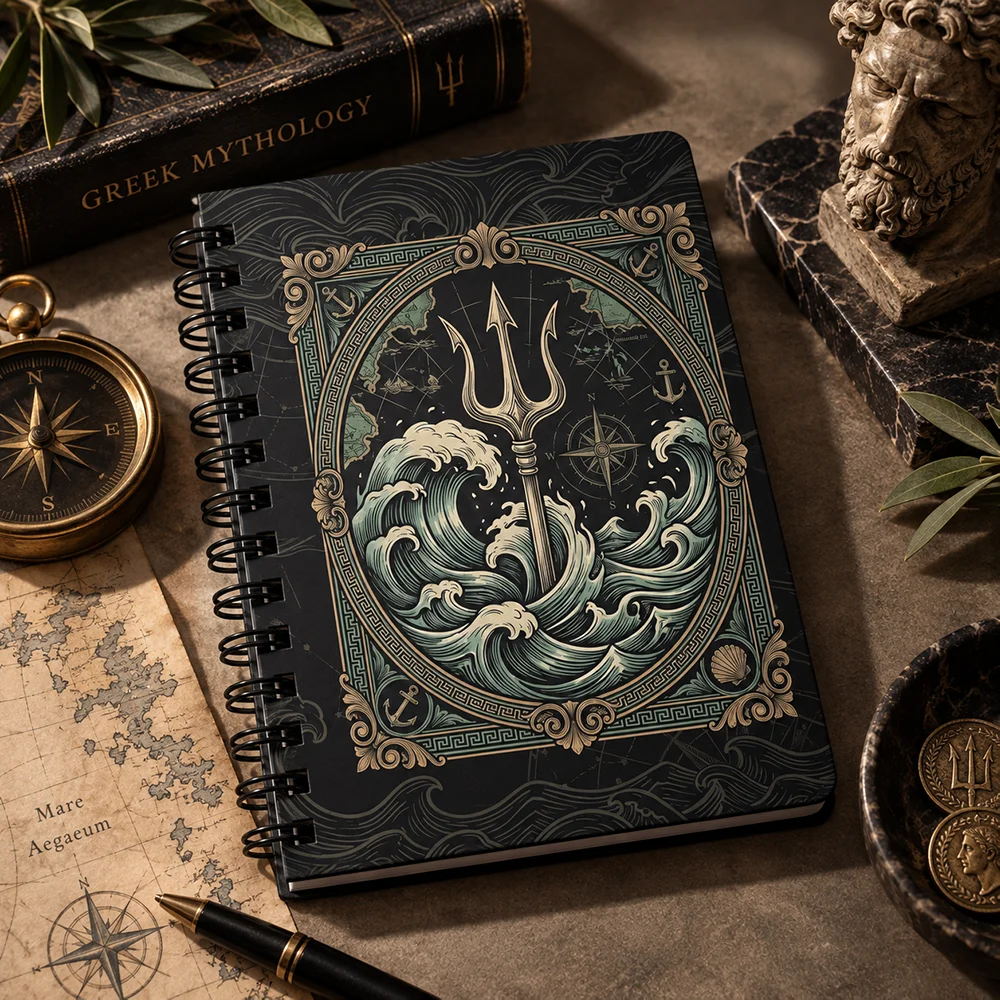
Poseidon Themed Greek Mythology Notebook
A striking notebook for anyone fascinated by Poseidon, the Greek god of the sea. The cover brings together his trident, crashing waves, compass rose, anchors, maps, and ornate Greek-inspired borders in a detailed vintage-style illustration.
It makes a thoughtful gift for a Greek mythology fan, Poseidon enthusiast, or anyone who likes their notebooks to have a little more character than a plain cover. The nautical details also give it an explorer’s feel, making it a natural choice for someone interested in mythology, ancient history, or the sea.
More Greek Mythology Notebooks
If they have a favorite Greek god, these notebooks offer a few more ways to bring Greek mythology into everyday life. Each design focuses on a different deity, with symbols and artwork drawn from their stories and attributes.
A detailed notebook inspired by Athena, featuring her helmet, owl, laurel, and other classical motifs. A thoughtful gift for someone interested in the goddess of wisdom and strategy, or simply someone who appreciates Greek mythology and beautifully illustrated historical themes.
A striking design inspired by Zeus, with an eagle, lightning bolts, storm clouds, and classical Greek detailing. A natural choice for a Zeus fan or anyone fascinated by the stories of the Olympian gods, with plenty of room for notes, ideas, or whatever else needs writing down.
A darker take on Greek mythology, built around a crowned skull, flames, the trident, and underworld-inspired imagery. This one suits someone drawn to Hades and the more mysterious side of the Greek gods, particularly fans who prefer their mythology with a darker edge.
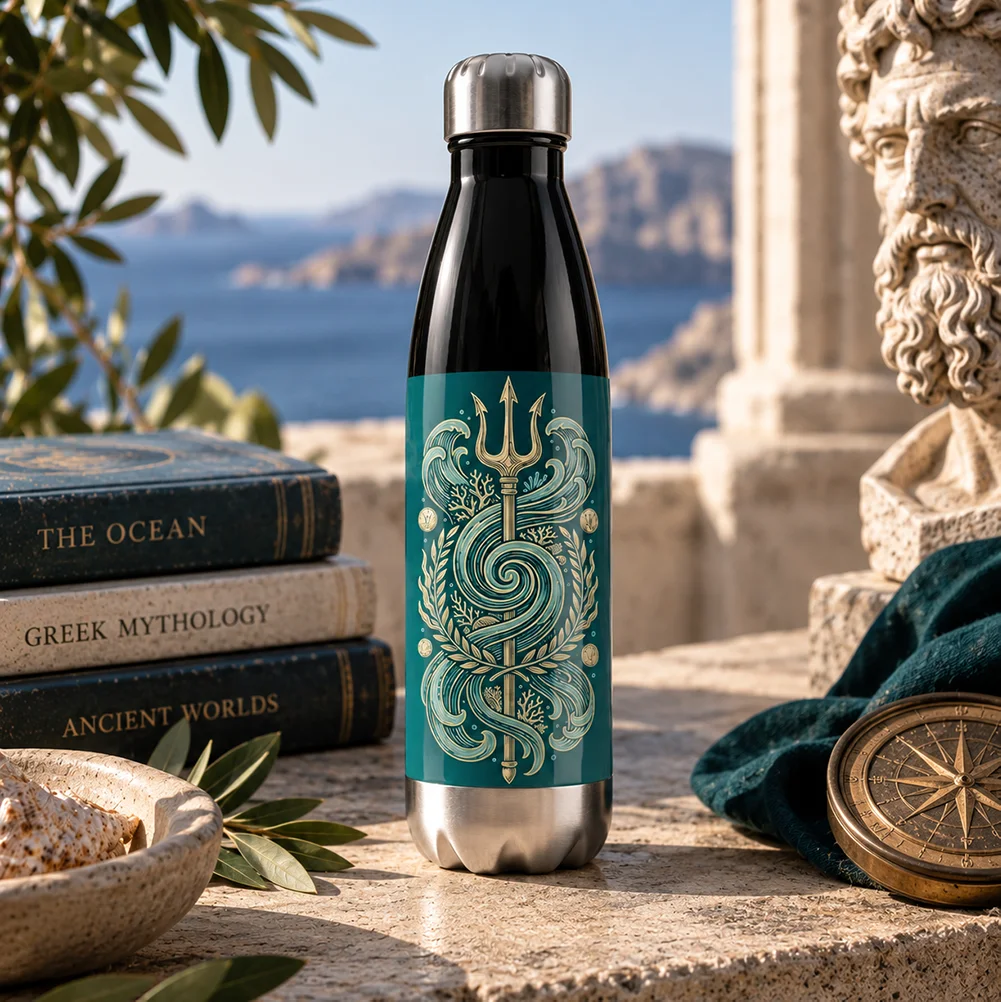
Poseidon Trident Water Bottle
A striking water bottle for anyone with a particular fascination with Poseidon and the sea. The design combines his trident with curling waves, coral, sea life, laurel leaves, and classical details in a rich teal and gold palette.
It makes a useful gift for a Greek mythology fan, a Poseidon enthusiast, or someone who simply likes mythology-inspired designs with a nautical feel. The artwork gives an everyday water bottle a little more personality without relying on an oversized character illustration.
More Water Bottles for Greek Mythology fans
If they have a favorite Greek god, a water bottle is an easy way to bring that mythology into something they will actually use. These designs focus on three very different figures, from Zeus and his thunder to Athena’s wisdom and Hades’ darker underworld imagery.
Zeus Lightning Bolt Water Bottle
A bold bottle inspired by Zeus, featuring a prominent lightning bolt and thunder-inspired artwork. A fitting gift for someone who likes the more powerful, dramatic side of Greek mythology, or simply has a particular fondness for the king of the gods.
Athena Owl Water Bottle
The Athena design combines an owl with a spear and laurel, drawing on the goddess’s associations with wisdom, strategy, and strength. The gold-on-black artwork has a refined, almost artifact-like quality, making this a thoughtful gift for an Athena fan or anyone who appreciates Greek mythology with a more understated aesthetic.
Hades Water Bottle
A darker choice inspired by Hades and the Greek underworld. The design brings together his bident with flames and underworld-inspired details, making it particularly suited to someone who gravitates toward the less conventional side of Greek mythology.
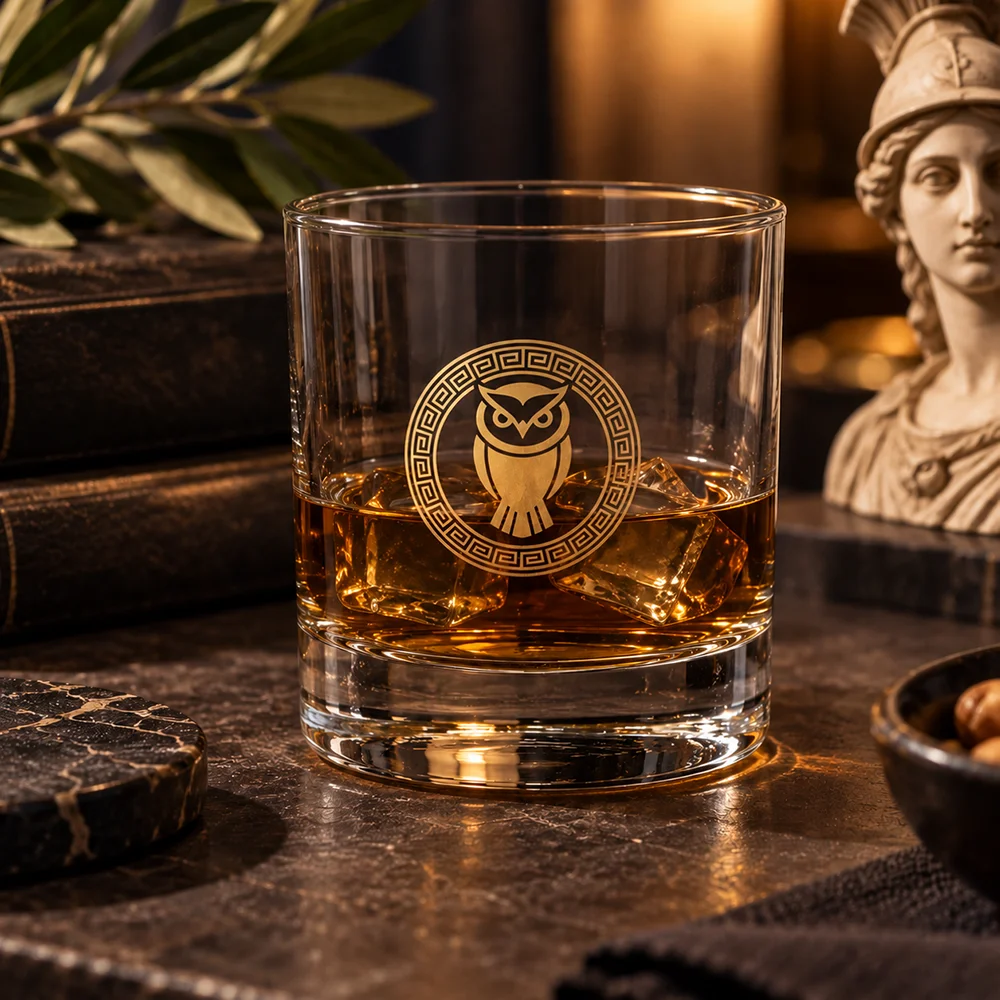
Athena Owl Whiskey Glass
A handsome glass for someone with an appreciation for Athena, Greek mythology, or the symbolism of the ancient world. The gold owl emblem sits inside a traditional Greek key border, giving the design a clean, understated look rather than a busy mythology-themed graphic.
It makes a thoughtful gift for an Athena fan, a mythology enthusiast, or someone who enjoys a good glass with a little history behind it. The owl is particularly fitting for Athena, representing the wisdom and intelligence associated with the goddess.

Greek Trident Lightning Tumbler
A bold travel tumbler for someone who likes their Greek mythology with a little drama. The design combines a large golden trident with curling teal waves and flashes of lightning, creating a striking interpretation of Poseidon and the power of the sea.
It makes a useful gift for a Greek mythology fan, Poseidon enthusiast, or anyone who likes mythology-inspired designs that feel modern rather than overly traditional. The black finish and gold-and-teal artwork give it enough presence to stand out while still being easy to use every day.
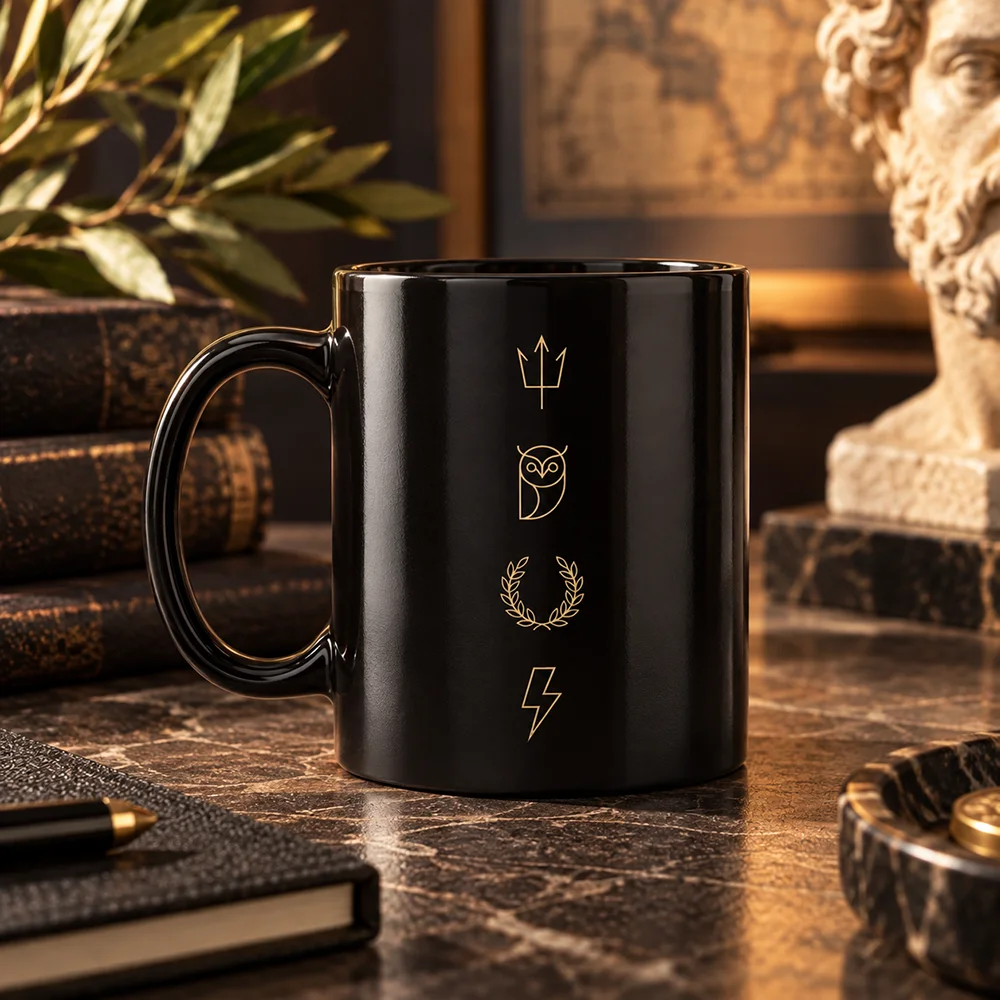
Greek Mythology Symbol Mug
A simple black mug with four symbols drawn from Greek mythology: a trident, an owl, a laurel wreath, and a lightning bolt. Each one hints at a different Olympian god, making the design feel more like a collection of ancient symbols than a conventional character graphic.
It is a good gift for someone who enjoys Greek mythology as a whole, rather than being devoted to just one god. The understated black-and-gold design also makes it easy to use at home or at the office without looking like typical novelty merchandise.
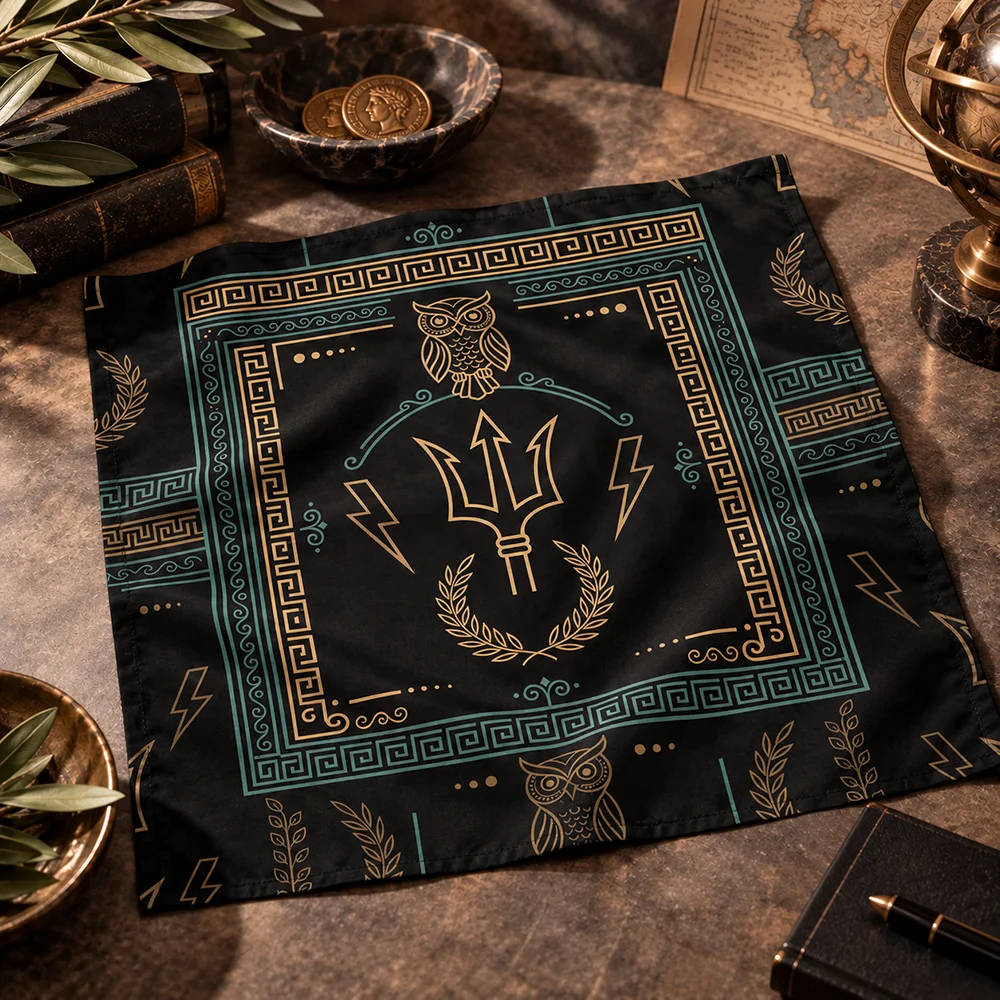
Greek Mythology Emblem Bandana
A Greek mythology-inspired bandana built around some of the most recognizable symbols of the ancient gods. The design brings together a central trident, lightning bolts, owl, laurel wreath, and Greek key borders in black, gold, and muted teal.
It makes a fun gift for someone who loves Greek mythology, especially if they prefer something a little less conventional than a T-shirt or mug. The repeating pattern also gives it a more decorative feel, while the individual symbols offer plenty for a mythology fan to recognize.
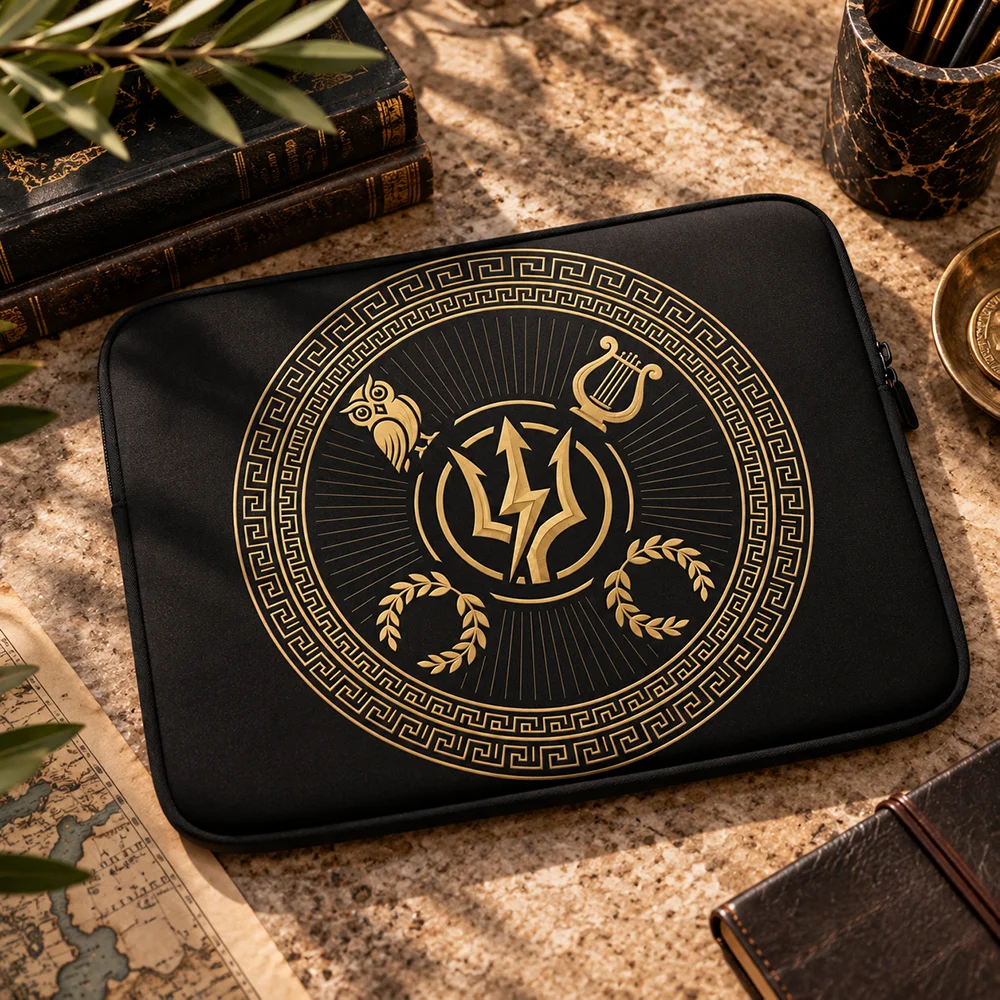
Greek Mythology Laptop Sleeve
A sleek laptop sleeve for someone who likes their Greek mythology a little more understated. The black design features a central trident surrounded by an owl, lyre, laurel branches, and an intricate Greek key border, bringing together symbols associated with several of the ancient gods.
It makes a thoughtful gift for a Greek mythology fan, classics student, or anyone who spends a lot of time with their laptop and appreciates a good bit of classical design. The black-and-gold palette gives it a refined look that works just as well in an office or classroom as it does at home.
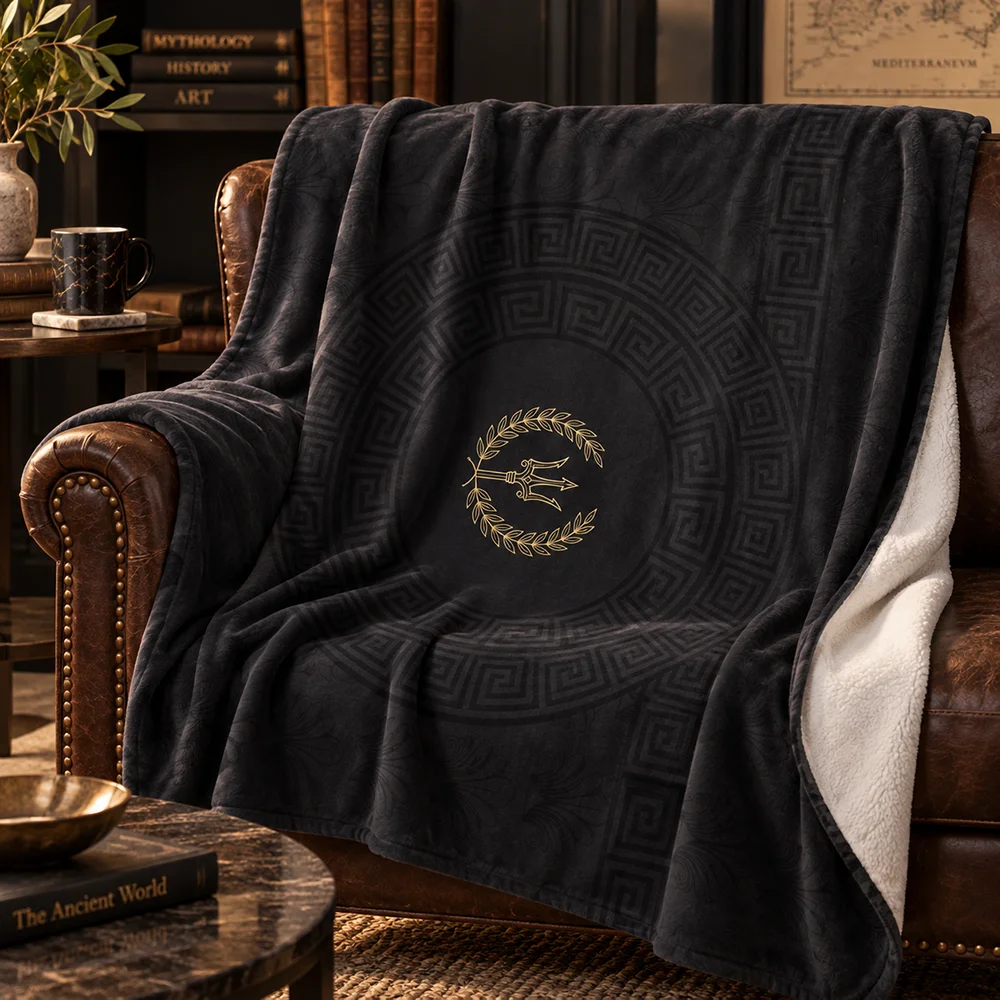
Greek Mythology Luxury Throw Blanket
A more understated way to bring Greek mythology into a room. This luxury throw features a charcoal-on-black pattern of Greek key motifs and classical detailing, with a gold trident and laurel emblem at the center. The dark palette gives it more of an old-world, library feel than typical mythology merchandise.
It makes a distinctive gift for someone who loves Greek mythology, ancient history, or classical design. The soft silk-touch fabric also makes it something they can actually use, whether draped over a reading chair, sofa, or the end of a bed.
Choosing a Greek Mythology Gift
The easiest way to choose a Greek mythology gift is to start with the person, not the mythology.
If you know they have a favorite god, start there. A Zeus fan has a fairly obvious visual language to work with. Athena gives you owls, laurel and symbols of wisdom and strategy. Poseidon brings the trident and the sea, while Hades opens up the darker side of the mythology. When you know the reference will mean something to them, a specific design usually feels more thoughtful than a generic Greek-themed gift.
If you don't know their favorite god, pay attention to what they actually use. Someone who lives in hoodies may get more enjoyment from a mythology-inspired sweatshirt than a decorative piece. A notebook makes sense for someone who is always writing or studying. A water bottle, mug or tumbler is a quieter option that can become part of their everyday routine.
This is also where it helps to think about their existing style. A gift doesn't have to look obviously mythological to feel personal. In fact, people are often more likely to use something that fits naturally into the way they already dress or live. Choosing a gift based on someone's lifestyle rather than just their interests can be a useful way to narrow things down.
And if you're buying clothing, look at what they already wear before guessing. A mythology reference they love is still not much use if the person would never put on the shirt. There are a few more things worth considering when choosing clothing as a gift, particularly style, fit and how the person actually dresses day to day.
If you're still unsure, choose something that combines a recognizable reference with an object they'd normally use. That tends to be a safer middle ground than trying to guess exactly which Greek god they identify with.
Find Gifts by Greek God
Sometimes the easiest way to choose a mythology gift is simply to know which god they like. That one detail can narrow the field considerably.
Zeus
For the Zeus fan, look for lightning, thunderbolts, eagles and the visual language of the sky. The collection includes everything from bold hoodies and T-shirts to notebooks and everyday drinkware. Good choices for someone who likes their mythology a little more dramatic.
Athena
Athena brings together some of the most recognizable symbols in Greek mythology: the owl, spear, laurel and the idea of wisdom and strategy. Her designs tend to work particularly well on notebooks, mugs and more understated everyday pieces.
Poseidon
Start with the trident. Add waves, the sea and a little movement, and you've got the visual vocabulary of Poseidon. Water bottles, tumblers and notebooks make especially natural choices here, although there are plenty of ways to take the theme beyond the obvious.
Hades
Hades is where the collection gets darker. Think the underworld, the bident, flames, skulls and deeper black-and-gold designs. There is plenty here for someone who has always preferred the less obvious god, or simply likes their mythology with a darker edge.
Frequently Asked Questions
What makes a good Greek mythology gift?
A good mythology gift usually has a specific connection to the recipient. That might be their favorite god, a symbol they recognize, or simply an interest in ancient Greek culture. A Zeus lightning design says something different from an Athena owl or a Hades-inspired piece. That specificity is often what makes the gift feel chosen rather than generic.
Which Greek gods work well for gifts?
Zeus, Athena, Poseidon, and Hades are particularly easy to build a gift around because each has a strong visual identity. Lightning and the eagle suggest Zeus, while Athena is associated with the owl, wisdom, and strategy. Poseidon has his trident and connection to the sea, while Hades brings the imagery of the underworld.
Are Greek mythology gifts good for readers and students?
They can be. Notebooks and journals are an especially natural choice for someone who reads, studies, writes, or spends a lot of time with history and literature. A mythology-inspired design also gives an otherwise ordinary everyday object a bit of context and personality.
What Greek mythology gifts actually get used?
The most useful ones tend to be things the recipient would already use: T-shirts, hoodies, notebooks, water bottles, mugs, tumblers, and laptop sleeves. The mythology becomes part of the design rather than the entire purpose of the object.
Can you give a Greek mythology gift to someone who isn't a mythology enthusiast?
Absolutely. A person doesn't need to know every Olympian to appreciate a well-designed owl, trident, lightning bolt, laurel wreath, or classical pattern. Some designs work first as clothing or home goods, with the mythology becoming an extra detail for someone who recognizes it.
Are Greek mythology gifts suitable for history lovers?
There is plenty of overlap. Greek mythology is closely connected with the literature, art, religion, and culture of the ancient Greek world. Someone interested in ancient history or classical culture may therefore appreciate a mythology-inspired gift, particularly when the design draws on recognizable classical imagery.
What's the difference between a Greek mythology gift and a Greek god gift?
A Greek god gift usually focuses on one particular deity, such as Zeus, Athena, Poseidon, or Hades. A broader Greek mythology gift can draw from several gods, myths, symbols, or elements of ancient Greek culture. If you know the recipient has a favorite god, a god-specific gift gives you a more obvious starting point.
What if I don't know their favorite Greek god?
You don't necessarily need to. A design built around familiar Greek symbols, rather than one specific deity, can be a safer choice. Tridents, laurel wreaths, Greek key patterns, owls, and lightning bolts can reference Greek mythology without requiring you to guess which god they like.