
The Best Gifts for History Buffs
History gifts for people who love the past. Witty, unusual, and carefully designed gifts for history buffs, from ancient civilizations to modern history.
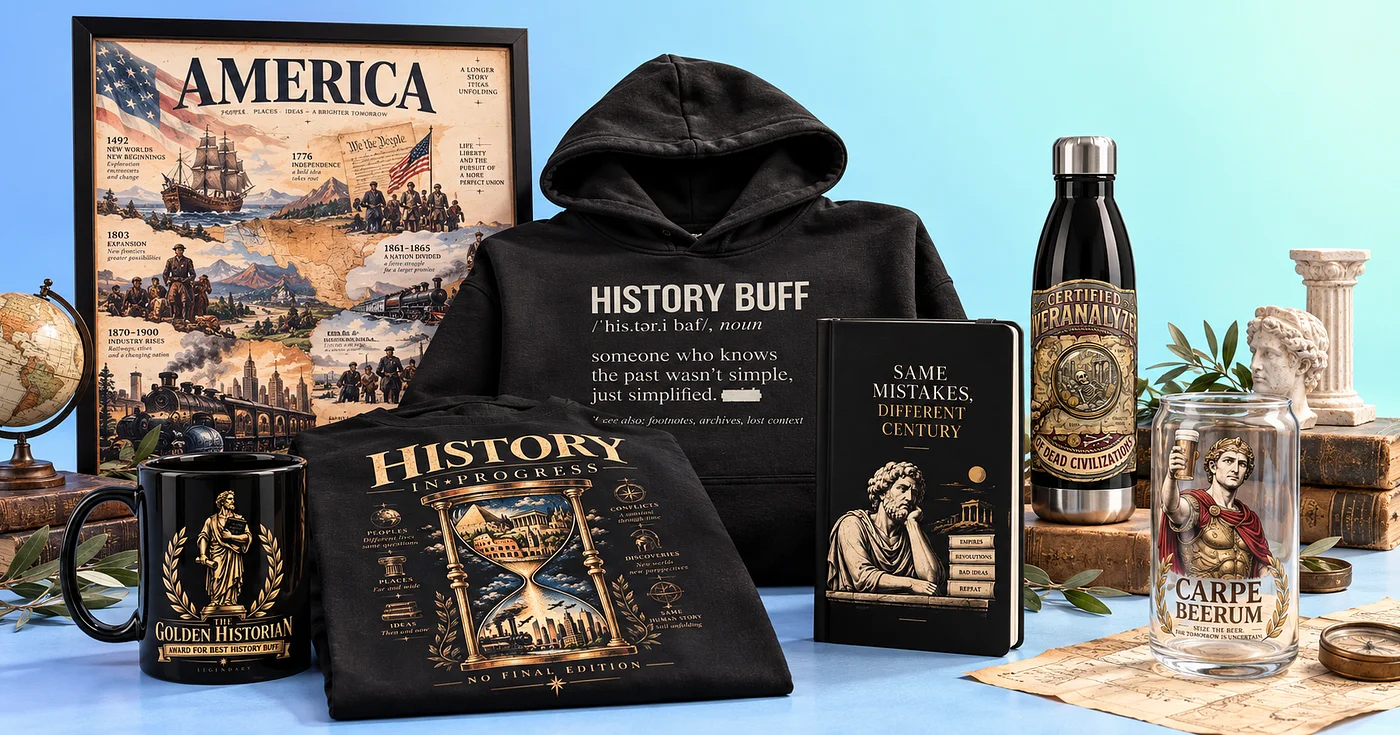
Not all history gifts are the same. Some are built around a favorite era, some around a particular reference, and some simply capture the feeling of being the person who can lose an afternoon going down a historical rabbit hole.
I've put this collection together for people who genuinely love the past. I've designed and selected gifts inspired by Ancient Rome, the Civil War, WWII, American history, and history more broadly, along with a few designs that are simply about being a history buff. Some are subtle, some are playful, and some are meant to look like something you might actually find in a study or library rather than a typical piece of novelty merchandise.
I've also tried to keep the collection varied. There are journals for people who are always reading and taking notes, mugs and drinkware for everyday use, posters for studies and libraries, and t-shirts and hoodies for the more humorous side of history. Some designs are very specific to a particular period; others are about the things history lovers tend to have in common: footnotes, primary sources, obscure facts, old maps, and the inevitable rabbit holes.
If you already know what period they love, you can also browse my Roman history gifts, Civil War gifts, and WWII gifts for more focused collections. If you're not sure where to start, this is probably the best place to look. And if you want to browse everything in one place, the full History Gifts Collection has the entire range.
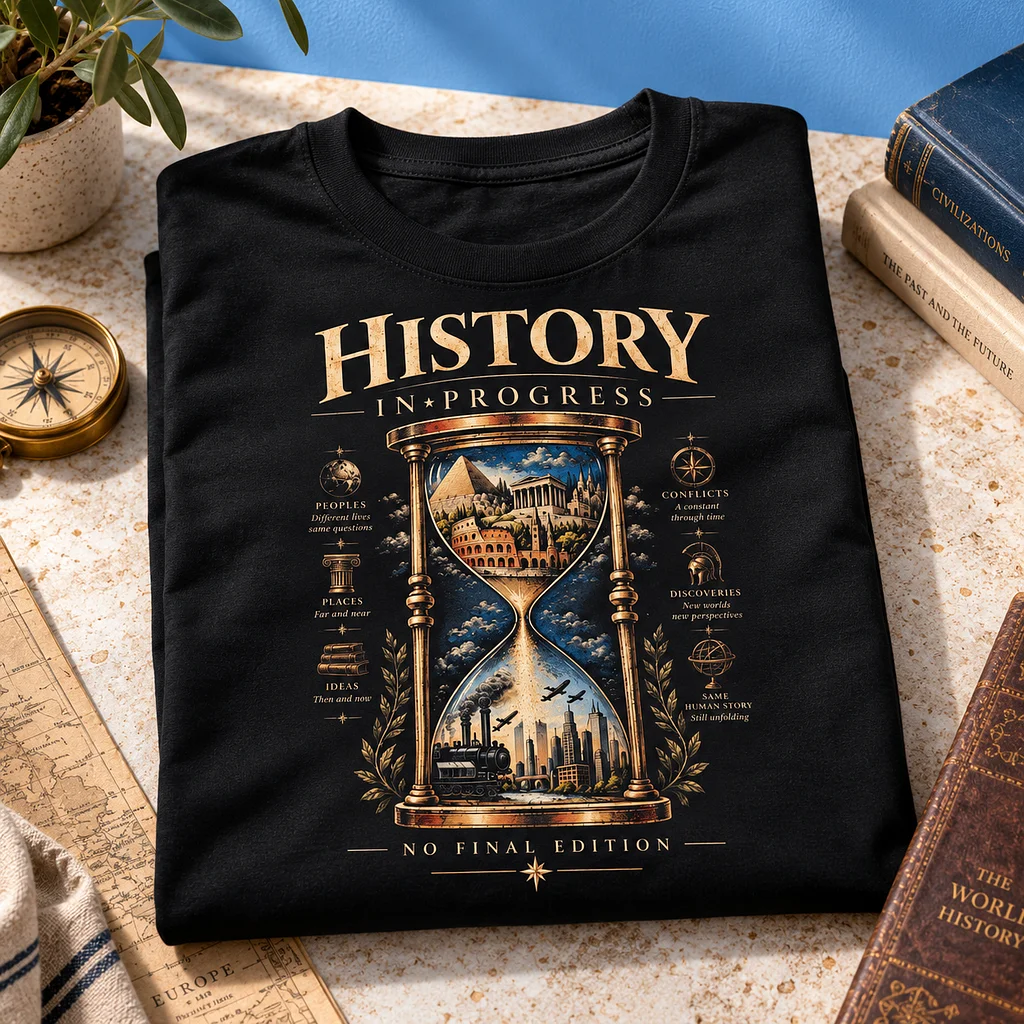
History in Progress T-Shirt
Most history merch treats the past like a finished story, all tidy and closed. This shirt pushes back on that idea. The design runs an hourglass down the middle, pyramids and Roman columns up top sliding into trains and modern skylines below, same shape, wildly different century. "No Final Edition" sits underneath it, which is really the whole point stated in three words.
It's a good fit for someone who thinks about history less as dates to memorize and more as a pattern that's still running. The small side details (people, places, conflicts, discoveries) aren't explained outright. They reward someone who actually stops to look, which is exactly the kind of person this shirt is for. Soft black cotton, museum-poster palette, the sort of graphic tee that reads more like framed art than a novelty print. Good for teachers, students, or anyone who'd rather wear a thesis than a joke.
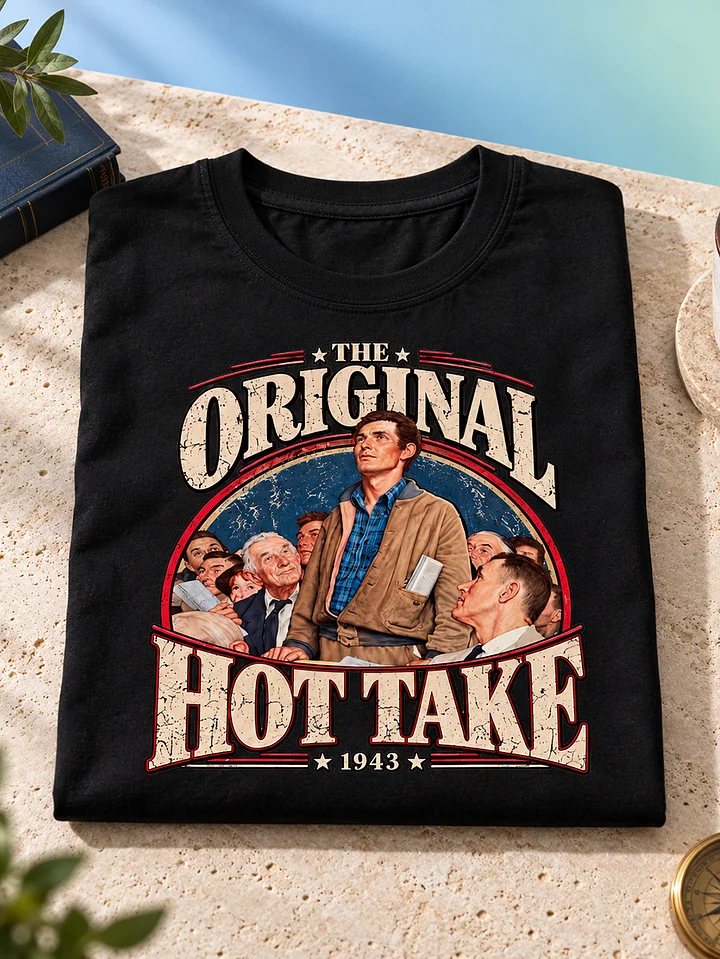
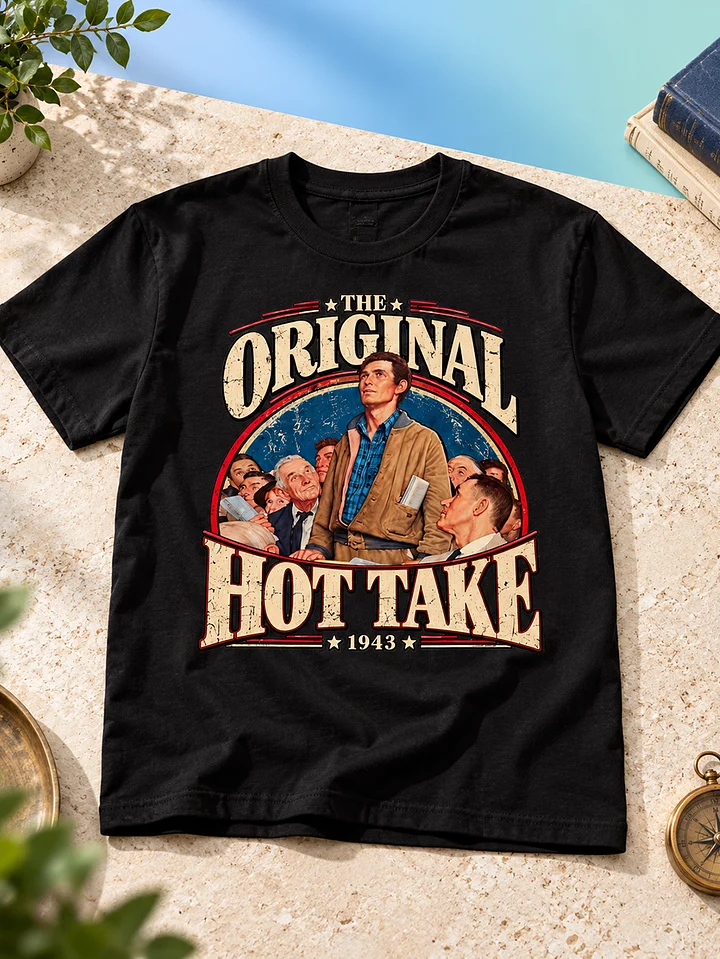
More T-shirts for people who love history
Some shirts announce the interest, others assume you'll recognize it on sight. These lean toward the second kind: classroom-ready puns and quieter jokes for people who can't watch a documentary without narrating the corrections under their breath.
History, The OG Teacher Shirt
History's been teaching lessons long before any classroom existed, and this shirt says so plainly. The bold, simple design works as an easy laugh for a teacher or professor, and as a slightly sharper gift from a student who's clearly been paying more attention than they let on.
BC/AD History Timeline Shirt
Some readers jump between centuries without much warning. The vintage hourglass design, aged textures and archival layout, looks pulled from an old history book rather than a modern print, which suits someone who's usually mid-way through two different eras at once.
I Paused Netflix to Read a Primary Source Shirt
Some people would genuinely rather dig through a scroll than finish an episode. The joke lands quietly here, nobody has to explain it twice, and the scroll-and-ink illustration gives it a timeless look instead of a trendy one.
Certified Overanalyzer of Dead Civilizations Shirt
Give some people a map of ancient ruins and they’ll immediately start looking for what everyone else missed. A wall detail, an odd layout, an artifact in the corner. This design is made for that kind of close reading, with maps, artifacts, and magnified details that reward taking a second look.
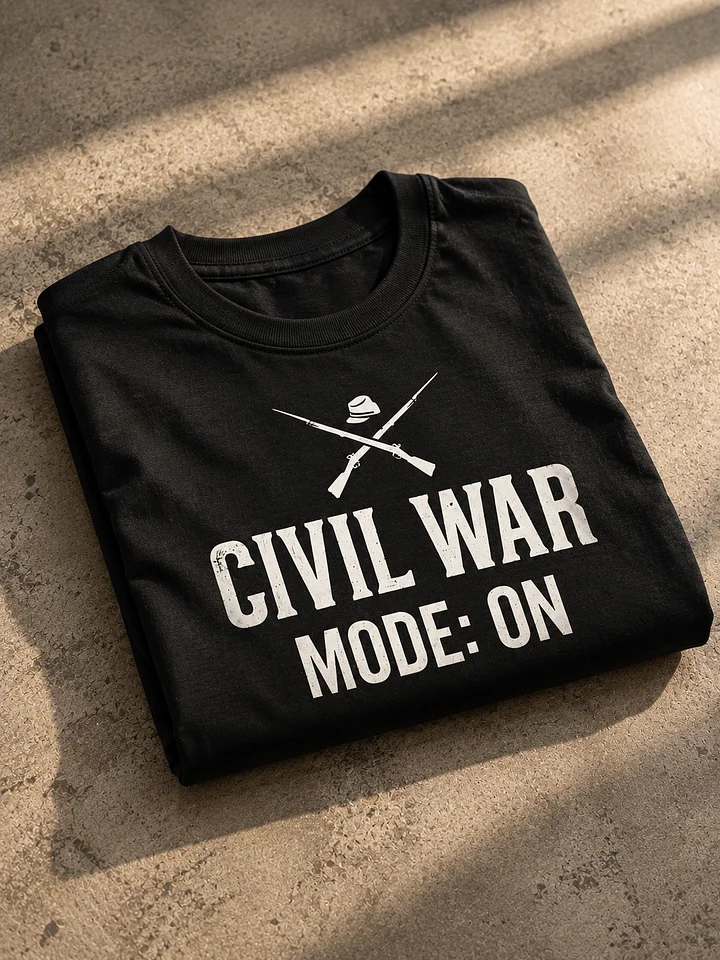
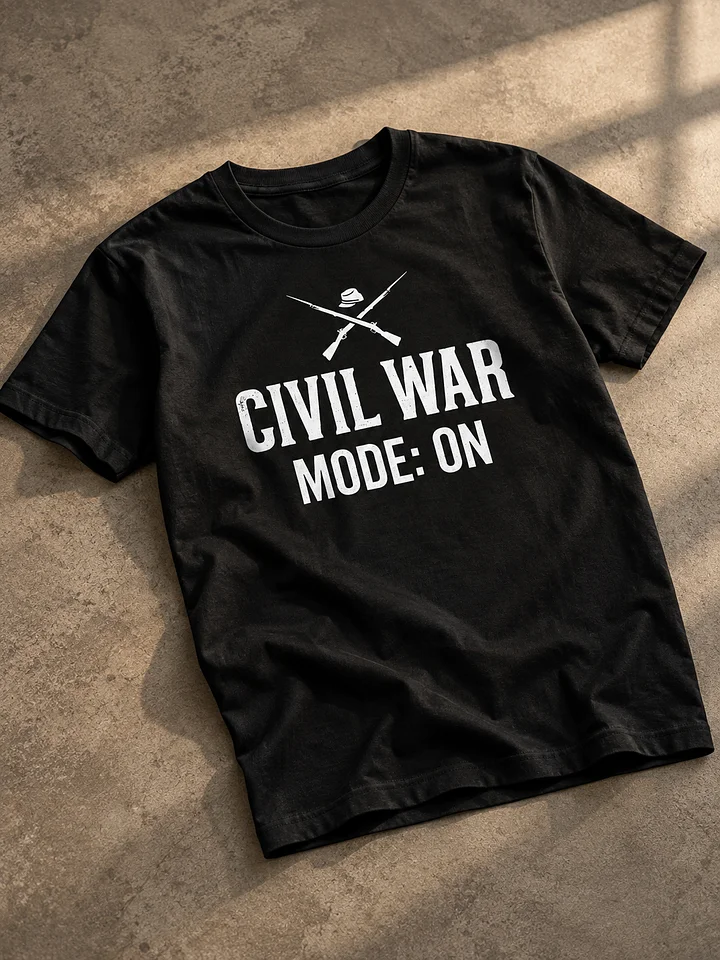
Civil War Mode: On Shirt
Casual Civil War interest has a way of turning into a full deep dive without warning. Crossed rifles and a bold, funny line make this one instantly recognizable to anyone who's watched a documentary quietly become a research project by the end of the night.
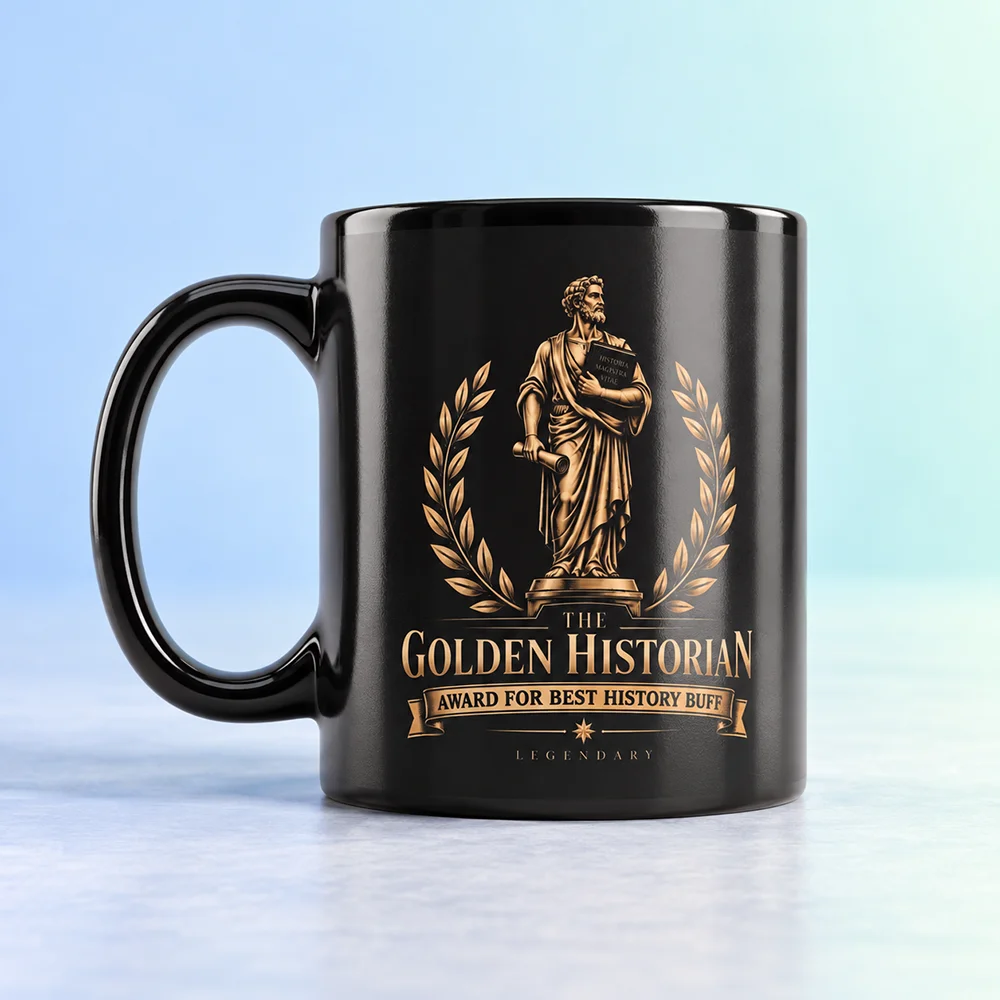
The Golden Historian Award Mug
An unofficial award for an officially serious interest in the past.
Every history buff has a moment where they correct someone's timeline of events, unprompted, at a party. This mug is basically an award ceremony for that instinct. Matte black with a gold Roman statue mid-declaration, book in one hand, scroll in the other, ringed by a laurel wreath like he just won something.
It works as a gift because it does what most history-themed merch doesn't: it makes the obsession feel like an achievement instead of a quirk to tolerate. Research on gift-giving backs this up: gifts that reflect someone's identity tend to land better than generic ones. This isn't just "for someone who likes history," it's a trophy for a very specific kind of person, and they'll know exactly who they are the moment they unwrap it.
More History Themed Mugs
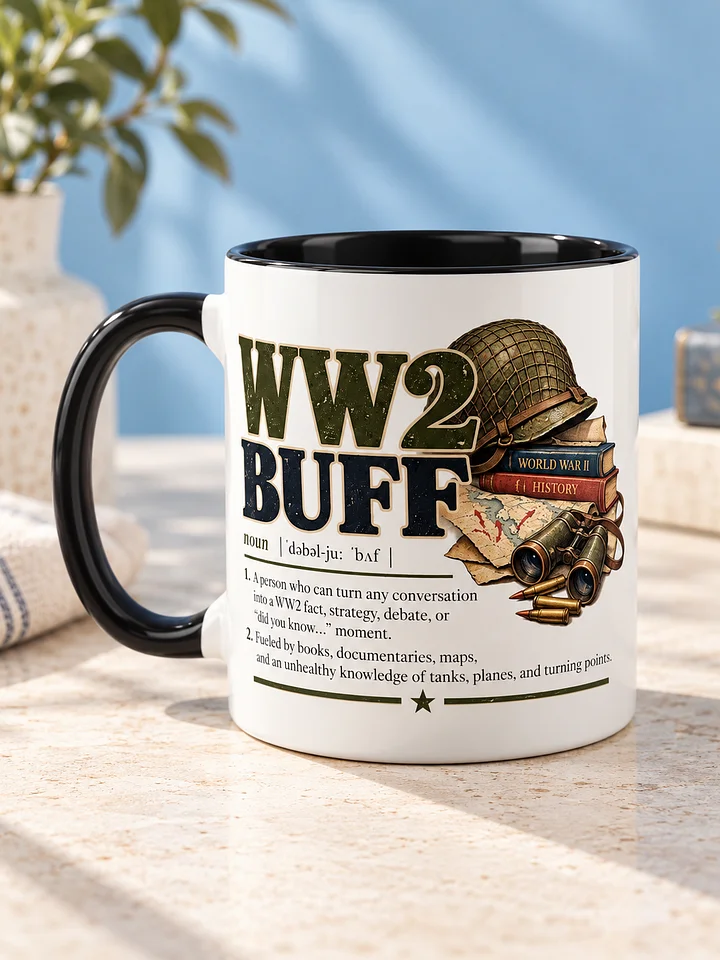
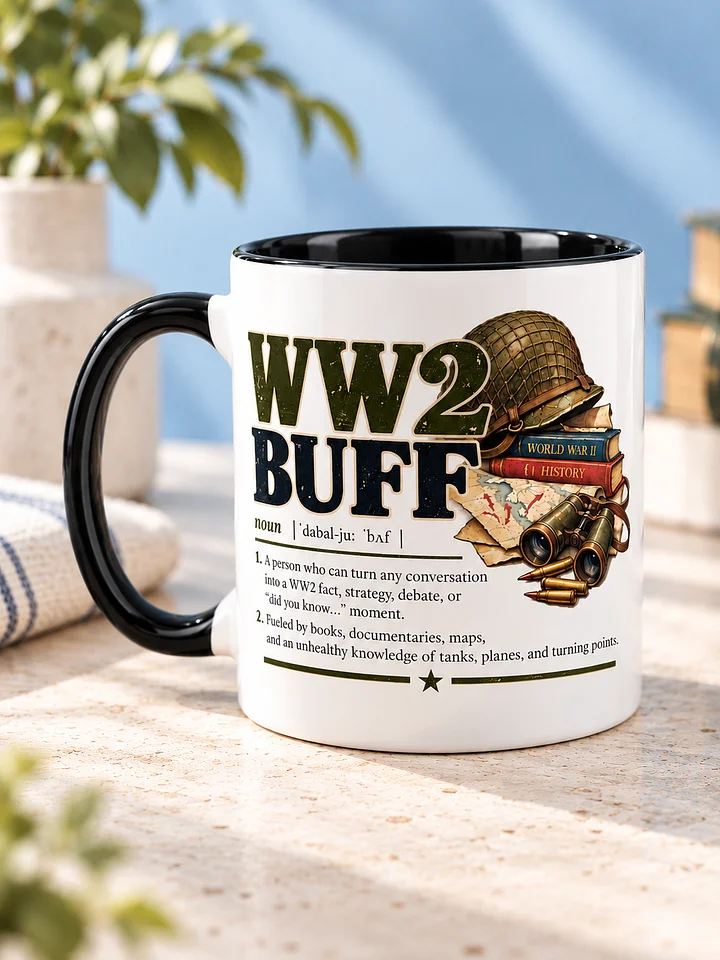
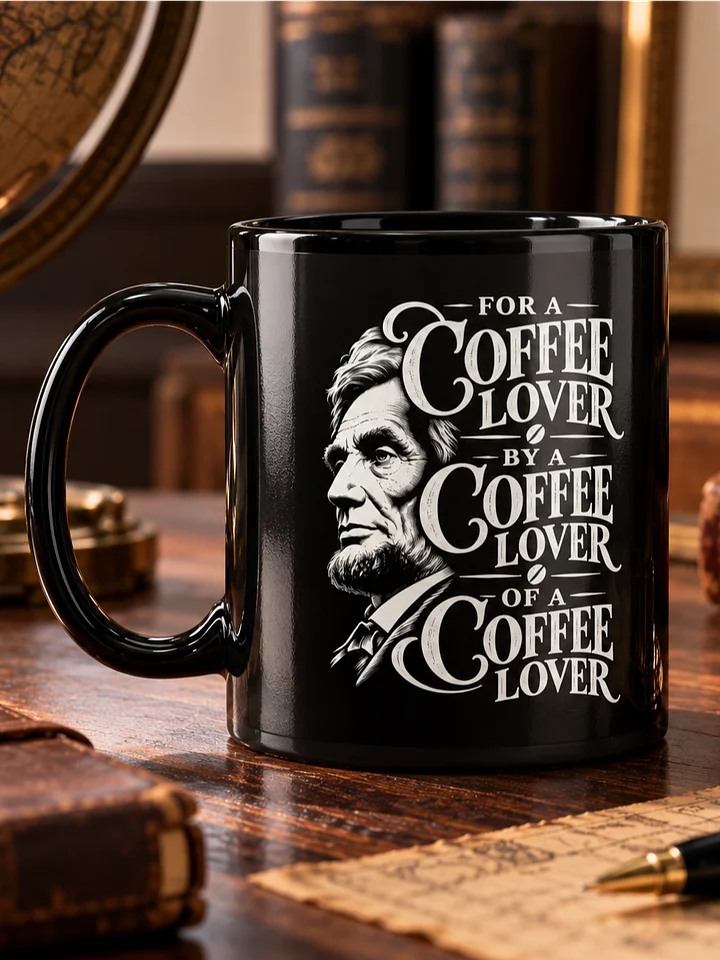
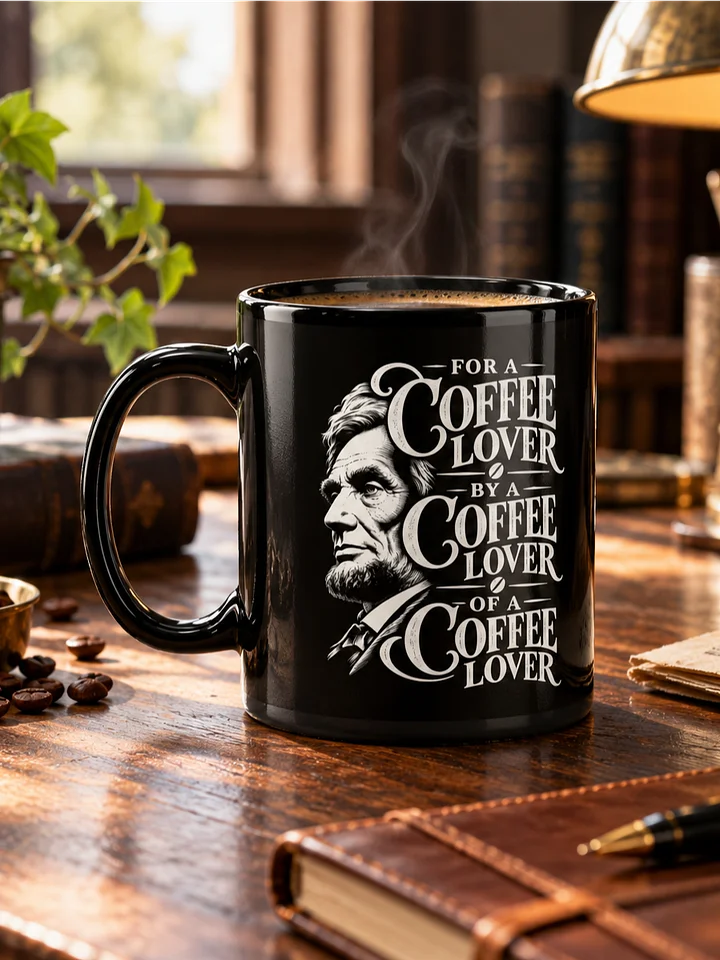
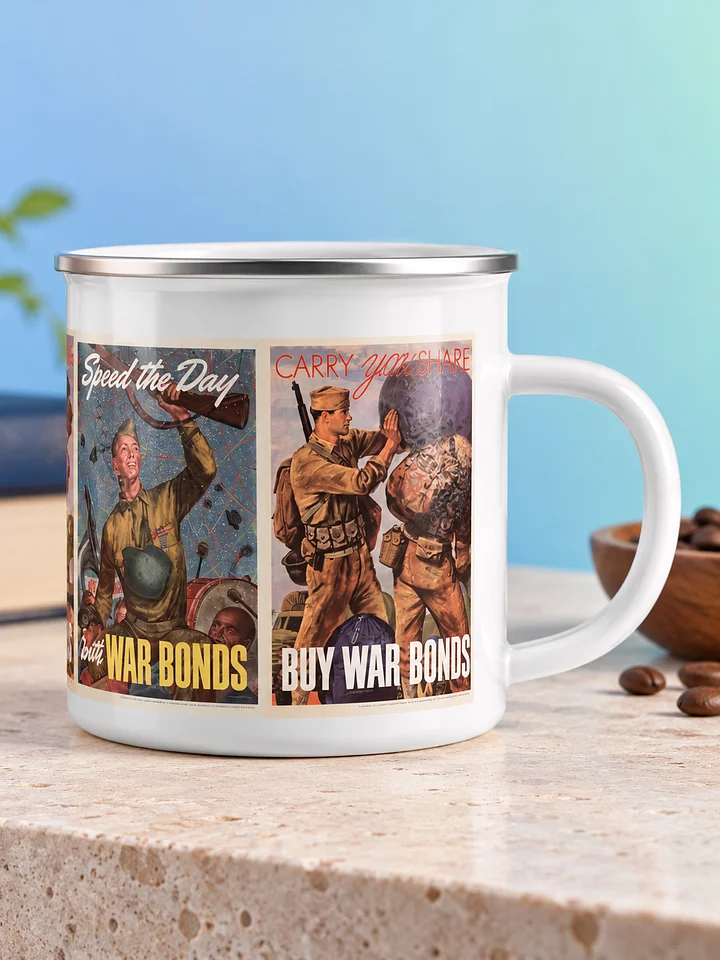

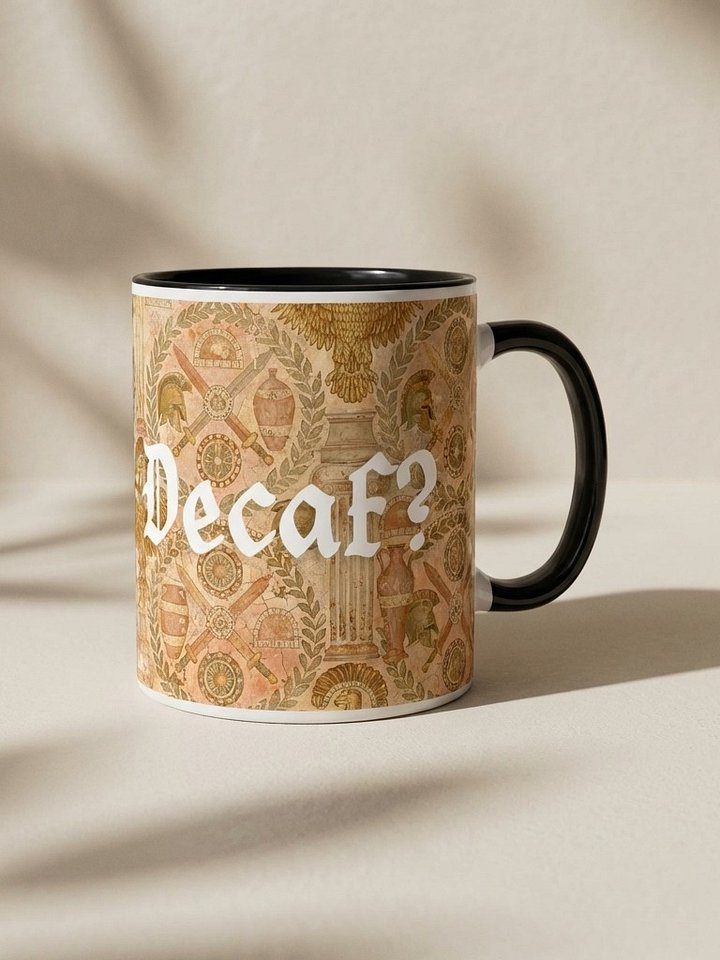

More mugs for history buffs
A few more mugs for people who like their morning coffee with a side of historical context, and who'd agree that mugs make surprisingly thoughtful gifts. From WWII poster art to Civil War primary sources, these are aimed at different flavors of history obsessive, with a couple of quieter jokes tucked in along the way.
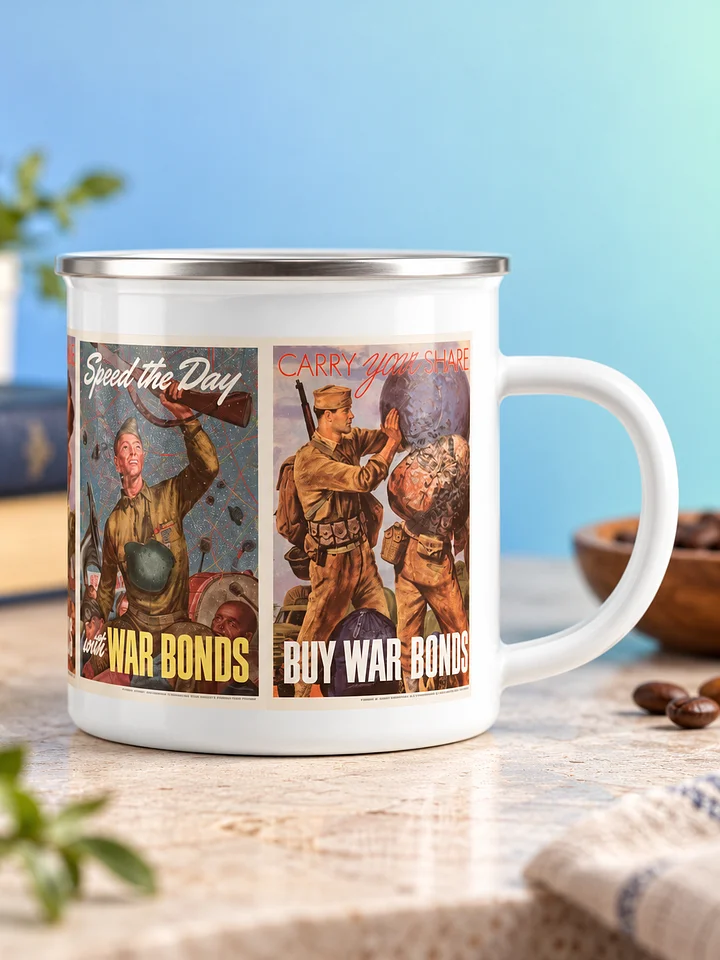
WW2 War Bonds Posters Inspired Mug
Bold illustrated posters promoted war bonds during WWII, and this mug carries that same visual energy into everyday use. A natural fit for someone interested in WWII, military history, or the visual culture of the period.
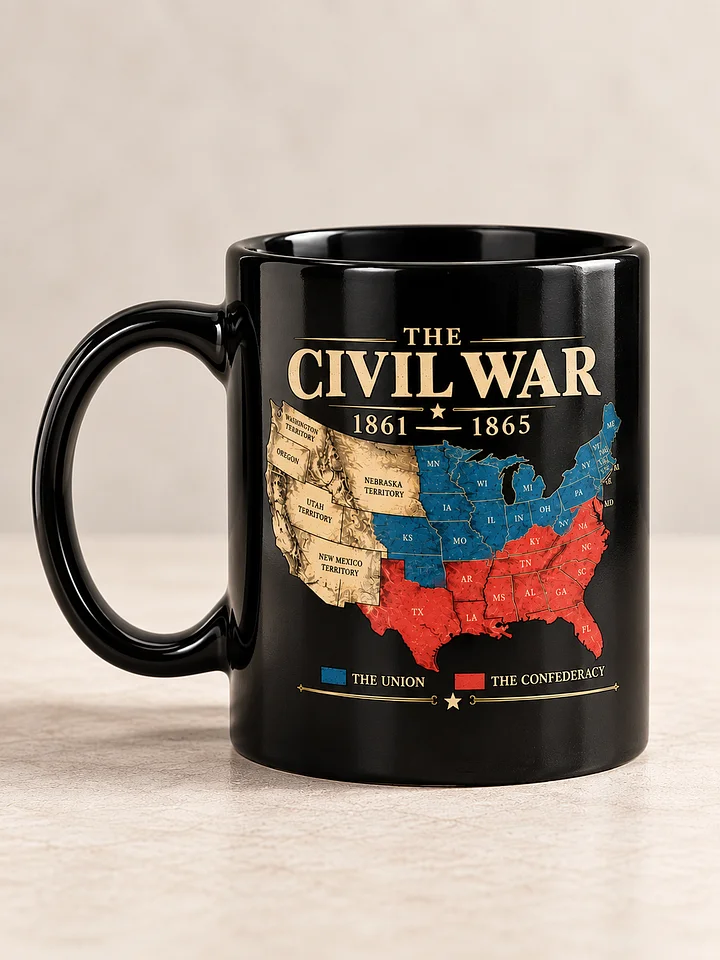
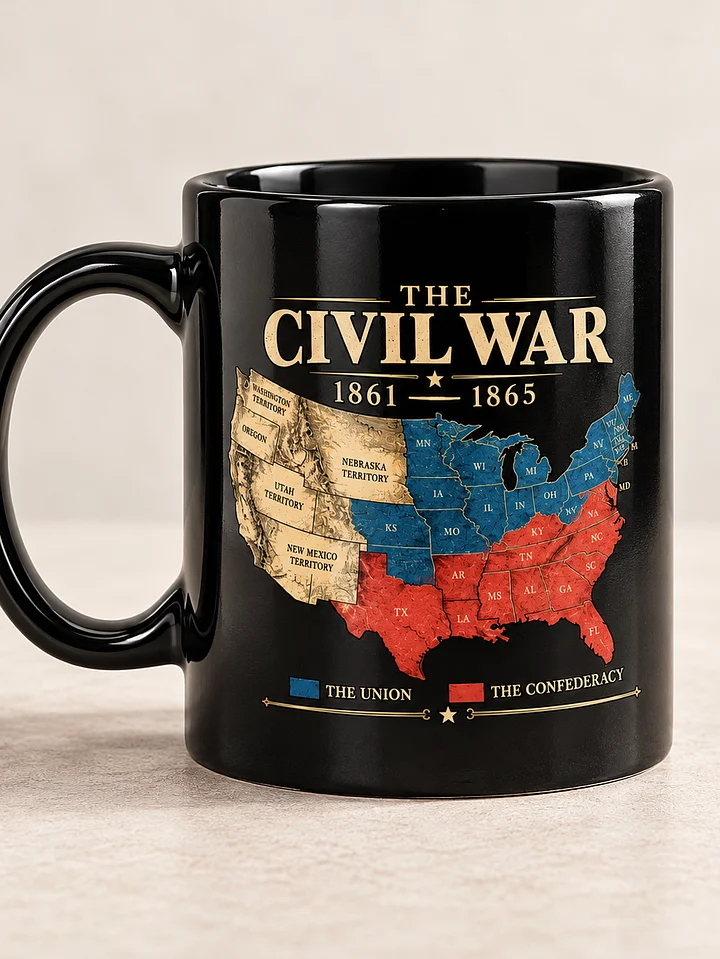
Civil War Coffee Mug (1861–1865) "Primary Sources Only"
Some people would rather read the letter than the textbook summary. One side keeps things simple with 1861 to 1865, the other delivers the punchline: "Primary Sources Only." The black-and-gold treatment gives it an appropriately archival feel.
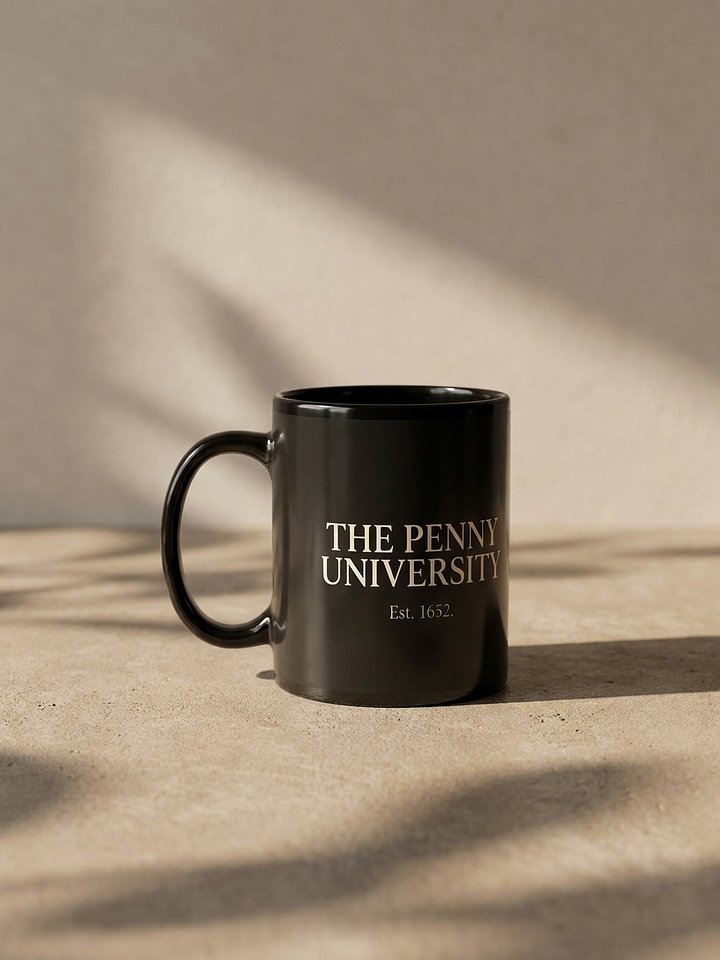
The Penny University Mug
This one comes with an actual historical story attached. "Penny University" was the nickname for the coffee houses of 17th-century England, where a penny bought coffee and access to a room full of conversation, arguments, and ideas. A nice pick for the history lover who enjoys the little details.
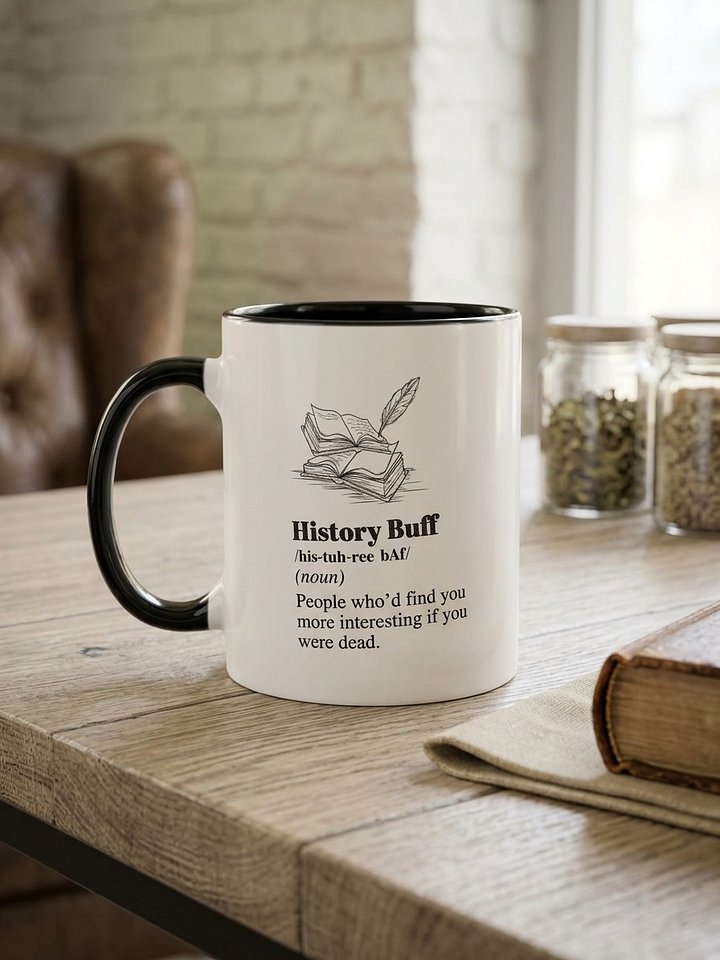
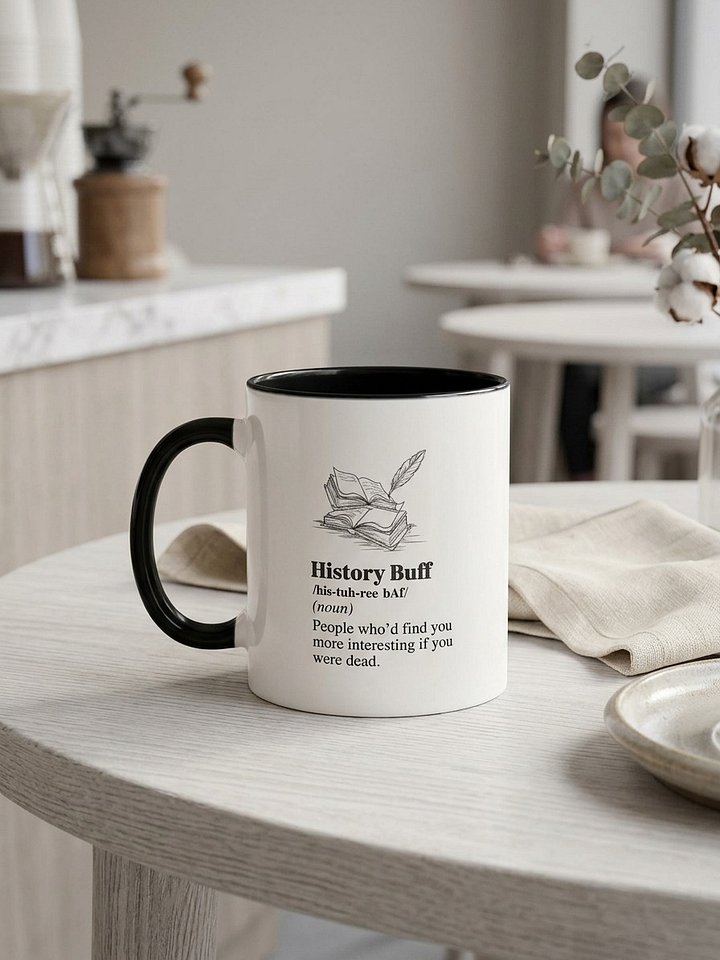
History Buff Definition Mug
A slightly dark sense of humor helps here. The definition reads, "People who would find you more interesting if you were dead," which is just about the right amount of inappropriate for someone who spends their free time reading about dead people.
Abraham Lincoln Coffee Lover Mug
For the history buff whose coffee habit rivals their reading habit. A monochrome Lincoln portrait sits beside bold vintage lettering reading "For a Coffee Lover by a Coffee Lover of a Coffee Lover," a small joke that makes a familiar face feel personal to anyone who starts the day with a cup and a bit of Lincoln history.
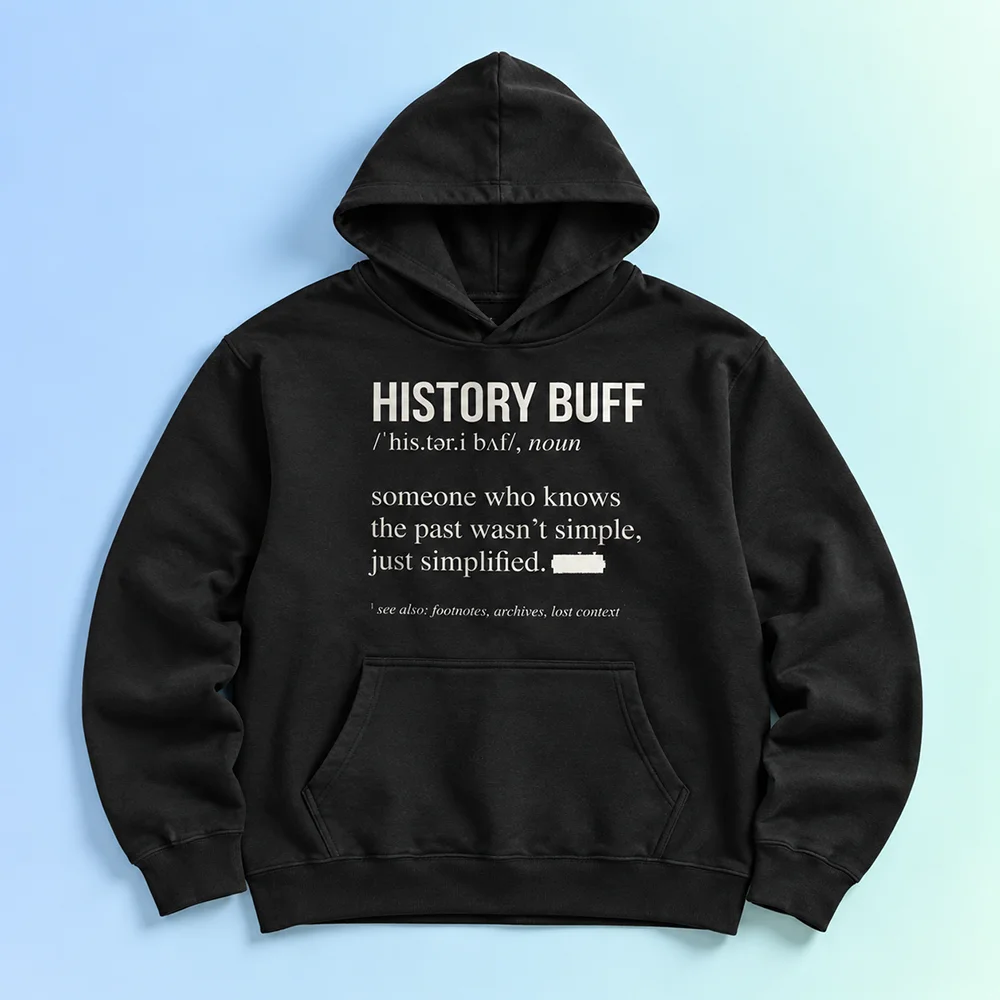
History Buff Definition Hoodie
Some history buffs collect books. Others collect obscure facts, correct movie inaccuracies, and somehow remember what happened to a minor duke in 1643. This hoodie is for that person.
The design treats "history buff" like a dictionary entry, with the wonderfully dry definition: someone who knows the past wasn't simple, just simplified. Beneath it are little references to footnotes, archives, and lost context. It's understated enough to wear without looking like conventional history merchandise, which is part of the appeal.
It also makes a good gift because it says something specific about the person receiving it. A good hoodie gift is rarely about price or brand anyway, it's about comfort and familiarity, and this one leans into that while still saying, "I know this is your thing."
More hoodies for history lovers
Something a little more understated than a novelty graphic. These draw from different corners of the past, from ancient Rome to the American Civil War, and let the history do most of the talking.
Dum Spiro Spero Hoodie
A fitting pick for anyone with a soft spot for ancient Rome, Latin, or classical philosophy. The Dum Spiro Spero motto, Roman eagle, legion standard, and laurel wreath give this hoodie the feel of an artifact from the ancient world rather than conventional history merch.
Civil War Hoodie
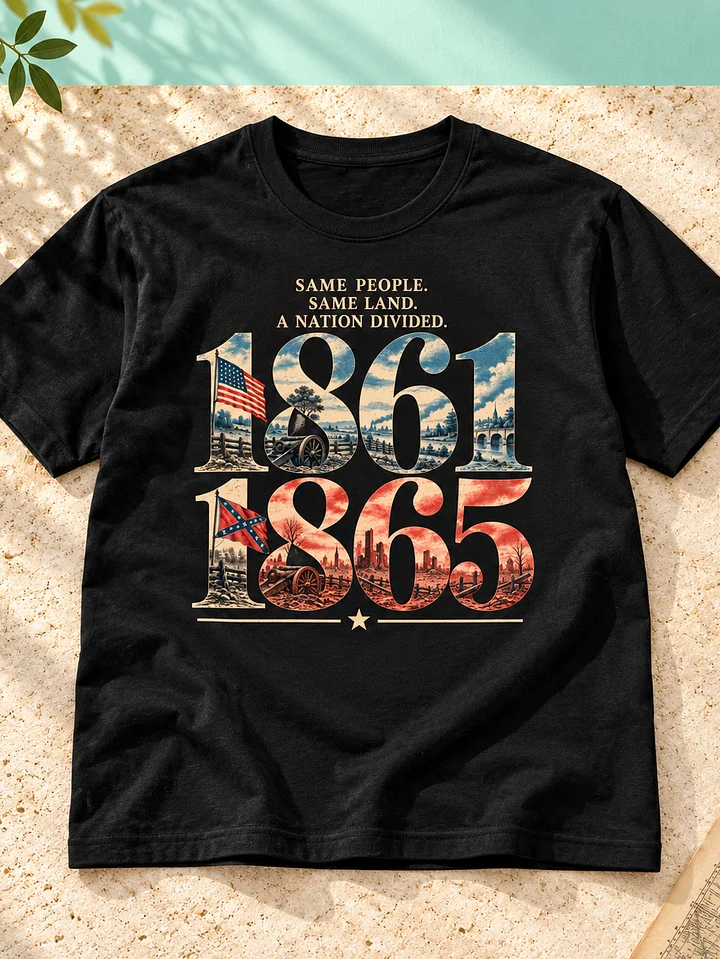
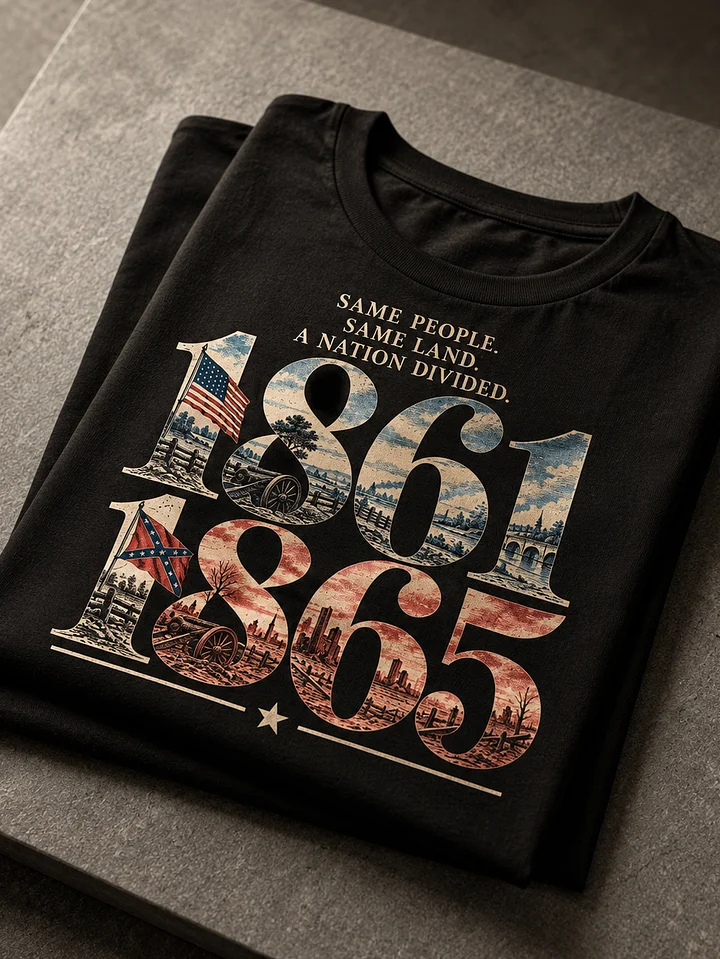
This is the sort of shirt that works particularly well for someone who knows exactly what 1861 to 1865 means without needing it spelled out. The restrained typography and vintage treatment keep the reference subtle, so it feels more like an inside reference than a piece of historical merchandise. That makes it a natural fit for someone who likes their Civil War interests understated.
Don't Make Me Repeat Myself Says History Hoodie
History has already explained what happens when people don't learn from it. This hoodie turns that familiar lesson into a dry little joke, particularly well suited to teachers, professors, and anyone who's watched the same mistakes happen more than once.
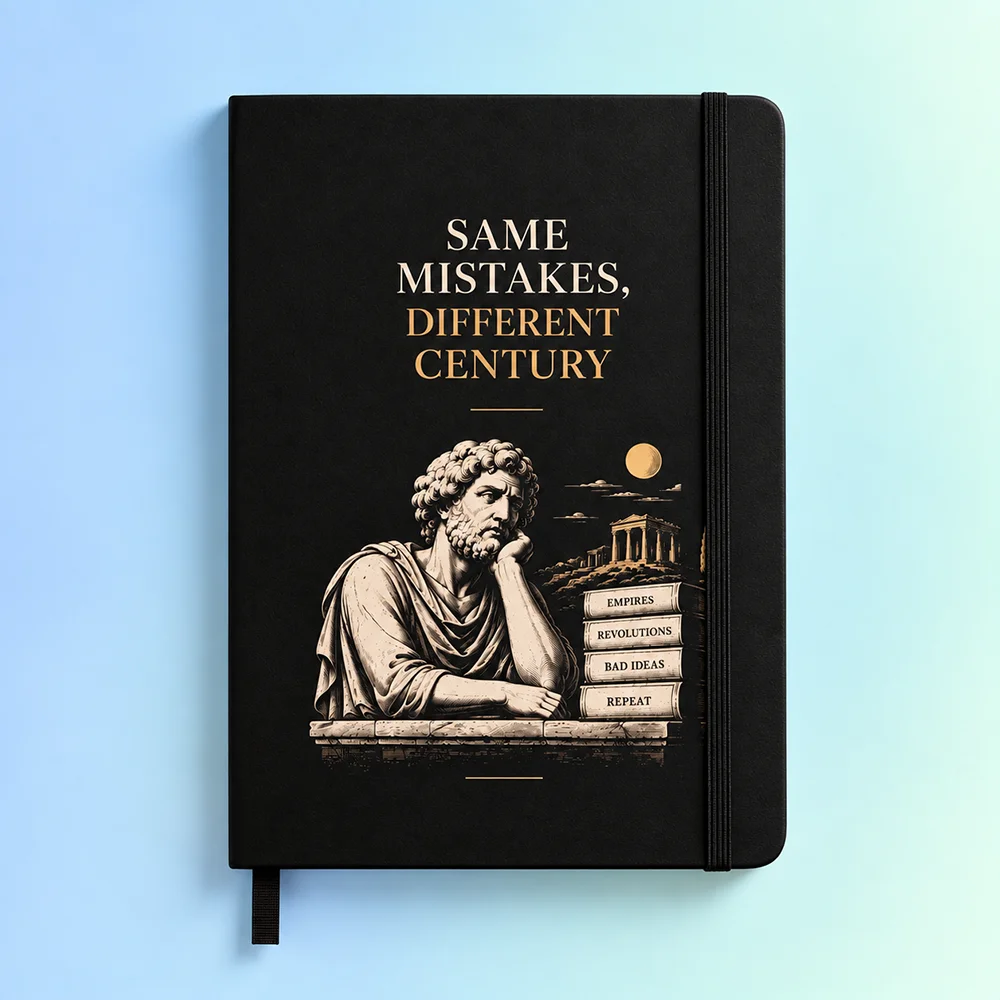
Same Mistakes, Different Century Journal
For the history buff who has noticed that humanity keeps finding new ways to make very old mistakes. This journal takes that observation and gives it a suitably scholarly treatment, pairing a contemplative classical figure with four recurring themes: empires, revolutions, bad ideas and, inevitably, repeat.
The joke is subtle enough that it doesn't feel like novelty merchandise. It looks more like something you'd find on the desk of a historian who has spent too much time reading about the collapse of civilizations. Inside, there’s plenty of room for notes, historical rabbit holes, reading lists, or whatever obscure question happens to demand investigation that afternoon. It’s an especially good gift for someone who enjoys history for the patterns as much as the events themselves.
More journals for history buffs
A few more history-themed journals for the person who likes to keep their own record of the past, whether that's rabbit holes, notes, or half-formed theories about why civilizations keep making the same mistakes.
Time Tells the Story Journal
For notes on the past, from fascinating discoveries to rabbit holes that somehow turn into three hours of reading. A thoughtful companion for books, research, and historical observations.
History Was Written in Code Journal
Some of the most fascinating parts of WWII never happened on a battlefield. They happened in code rooms, intelligence offices, and behind desks where a message could matter as much as a weapon. This journal taps into that side of the war, bringing together the Enigma machine, coded messages, maps, aircraft, and intelligence work in an engraved-style design. It should appeal to someone who is more interested in how the war was fought behind the scenes than in another generic WWII graphic.
1861–1865: A Divided Nation Journal
A Civil War journal for anyone fascinated by the conflict that divided a nation. The engraved-style cover brings together battlefields, flags, artillery, and maps in a restrained archival design, a fitting place for notes, reading lists, and Civil War rabbit holes.
Abraham Lincoln Quotes Journal
A sepia-toned Lincoln portrait dominates the cover, ringed by handwritten-style passages from his speeches, including the familiar "government of the people, by the people, for the people" line. It reads more like an old illustrated volume than a notebook, a natural pick for the Lincoln enthusiast who collects quotations as much as facts.
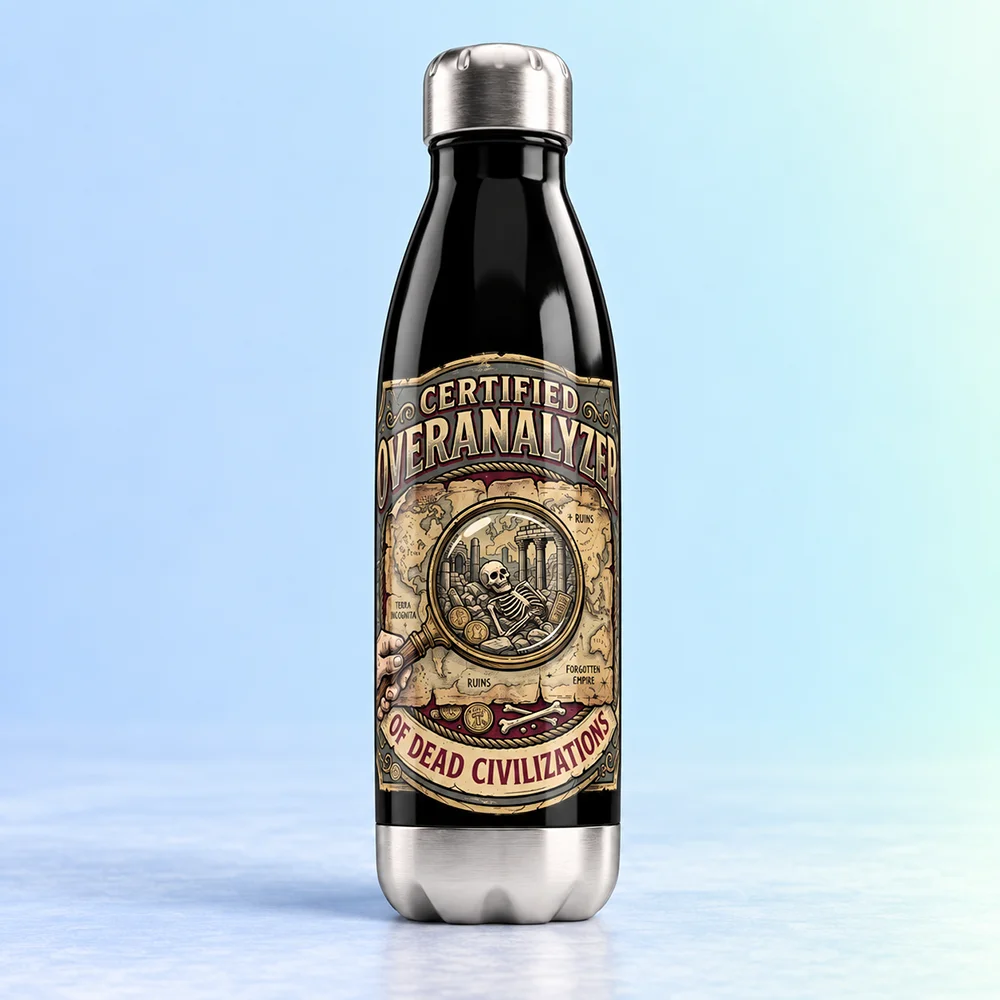
History Themed Water Bottle
For the history buff who has a tendency to overthink civilizations that disappeared thousands of years ago. This bottle turns that particular habit into a wonderfully specific joke, with an antique-map label, magnifying glass, ruins, coins, and a skeleton beneath the wonderfully official-sounding title “Certified Overanalyzer of Dead Civilizations.”
It makes a good gift because it feels personal without requiring you to know exactly which period of history they love most. The design speaks to the broader obsession: ancient ruins, forgotten empires, archaeology, and the endless questions surrounding civilizations that are no longer around to answer them. The black bottle and distressed vintage artwork also give it enough character to feel like a proper piece of history-themed merchandise, rather than just another novelty water bottle.
$29.90
More history themed drinkware
For coffee, water, or cold brew that feels like part of the interest rather than just a container for it. Insulated builds meant for daily carry, dressed in vintage insignia and quotes that hold up to a second look.
History Vintage Statue Themed Tumbler
A good quote matters as much as a good artifact here. Classic statue imagery pairs with a line from historian Henry Glassie about history being a map of the past, not the past itself, giving this 20oz tumbler more to chew on than most drinkware bothers with.
Civil War Tumbler (1861-1865)
Someone who knows their Civil War dates will get the reference immediately. The 1861 to 1865 design is deliberately restrained, with an archival feel that makes it look more like a historical record than a piece of themed merchandise. It’s a good fit for someone who likes their interests understated, with just enough detail for another history-minded person to notice.
Civil War Water Bottle (1861-1865)
For someone who notices the details of military history, the crossed rifles, crest, and period-inspired design will say more than a big, obvious Civil War graphic ever could. The 1861 to 1865 reference keeps the design grounded, while the archival treatment gives it the feel of an old military record. It’s a good choice for someone whose interest extends beyond the major battles to the uniforms, insignia, and visual details of the period.
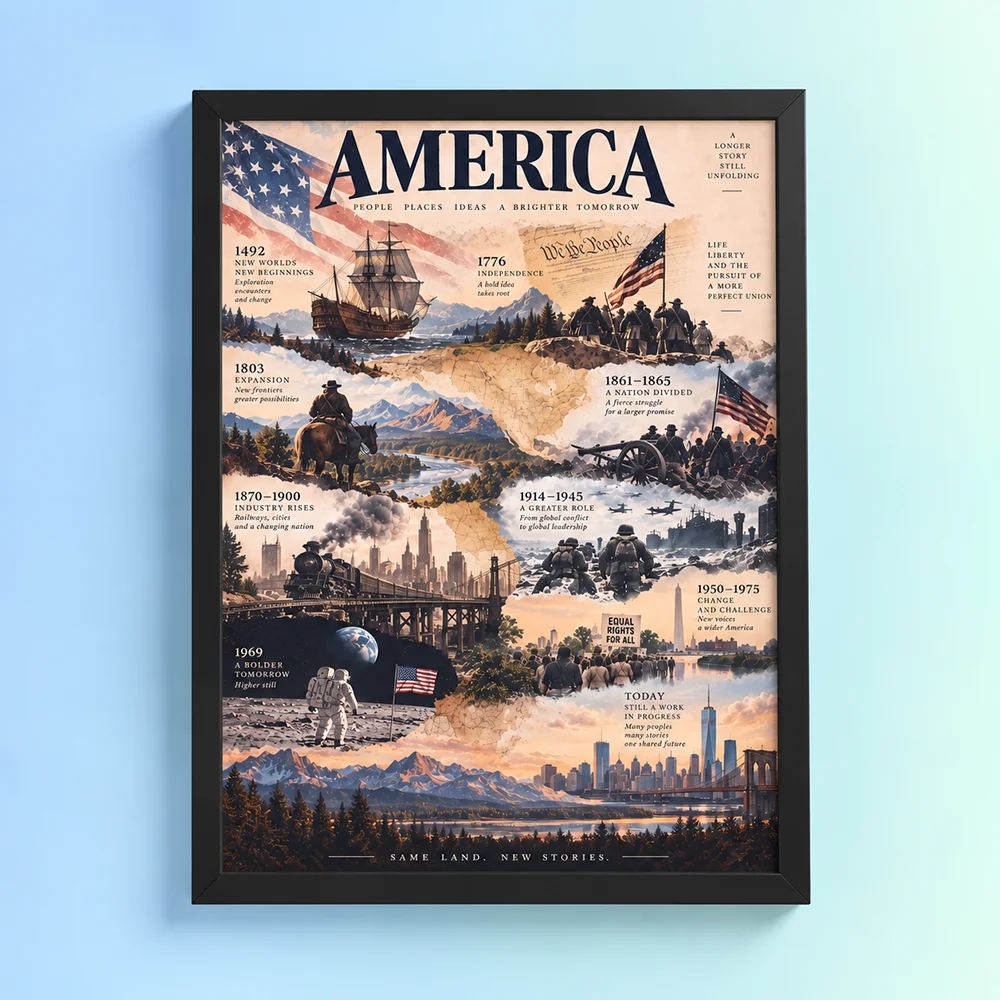
The Story of America: A Visual History
For someone who loves American history, this poster offers a little more than a single historical moment. It brings together centuries of American history in one richly illustrated composition, from exploration and independence to the Civil War, industrialization, the world wars, the civil rights movement, the moon landing, and the America of today.
It’s a particularly good gift for someone who enjoys seeing the bigger picture of history rather than focusing on one era. The combination of historical scenes, maps, landmarks, and period-inspired artwork also makes it feel more like a piece of historical wall art than a conventional poster. A thoughtful pick for a history buff, American history enthusiast, teacher, or anyone who enjoys having something interesting to discover every time they look at it.
More unique posters for history buffs
Something denser than the single-battle, single-figure approach. Gifts you can display tend to stick in memory longer than ones that get put in a drawer, which is part of why posters work so well here, layered with the kind of period detail that rewards a slow look rather than a glance.
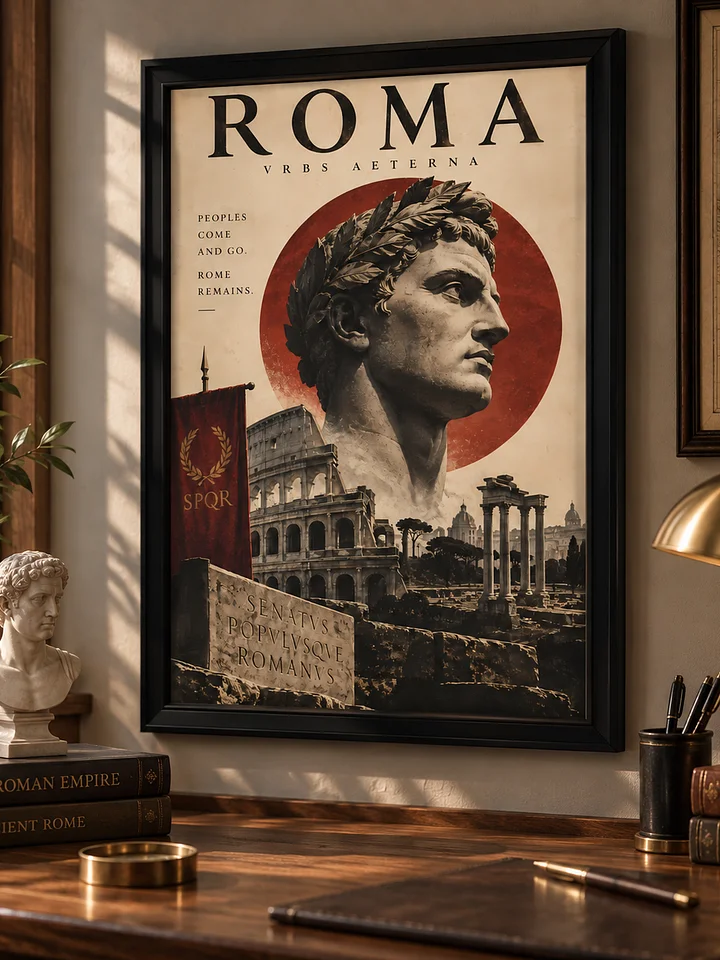
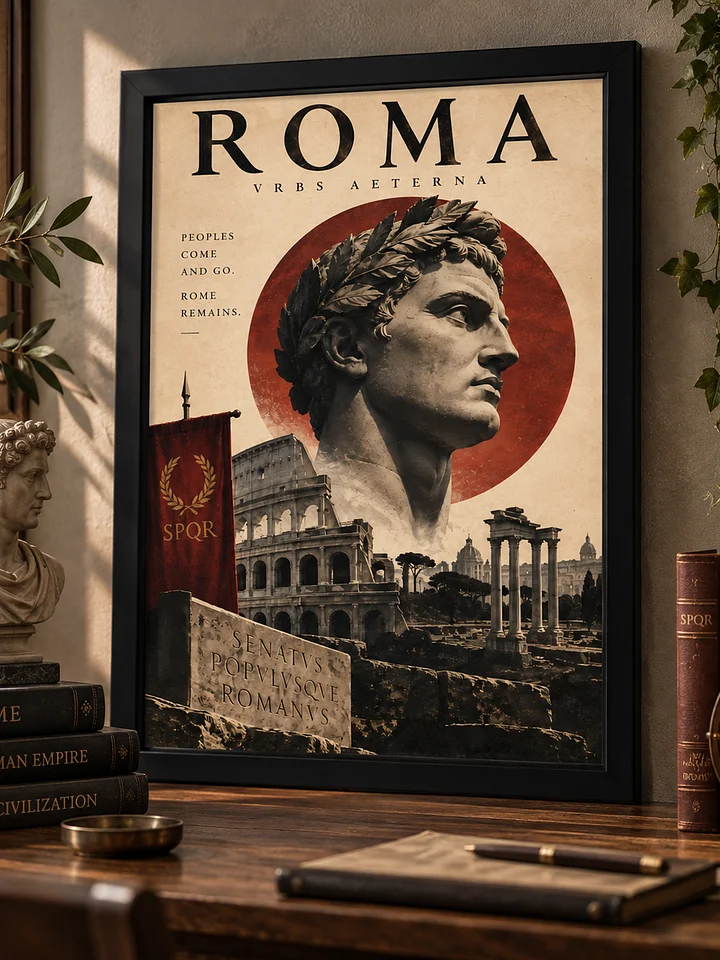
Roman History Poster
For the classics student, or anyone who'd call ancient Rome their favorite rabbit hole. A laurel-crowned bust anchors the design, framed by the Colosseum, weathered columns, and an SPQR banner, with "Urbs Aeterna," Eternal City, tying it together. The aged cream and bronze palette gives it the feel of an old archaeological print, at home in a study, library, or office.
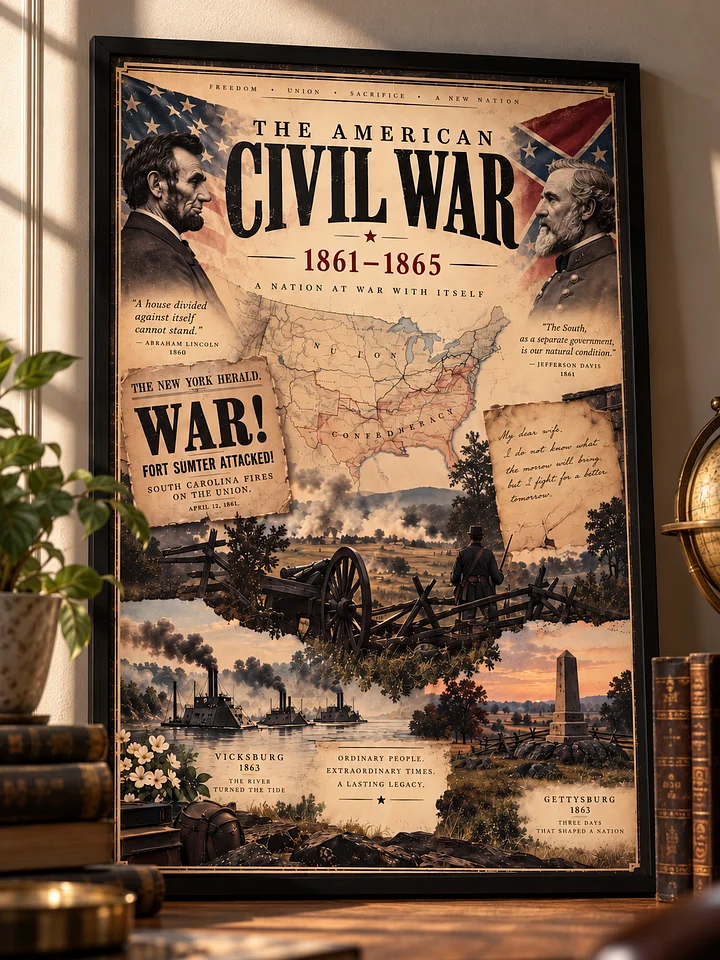
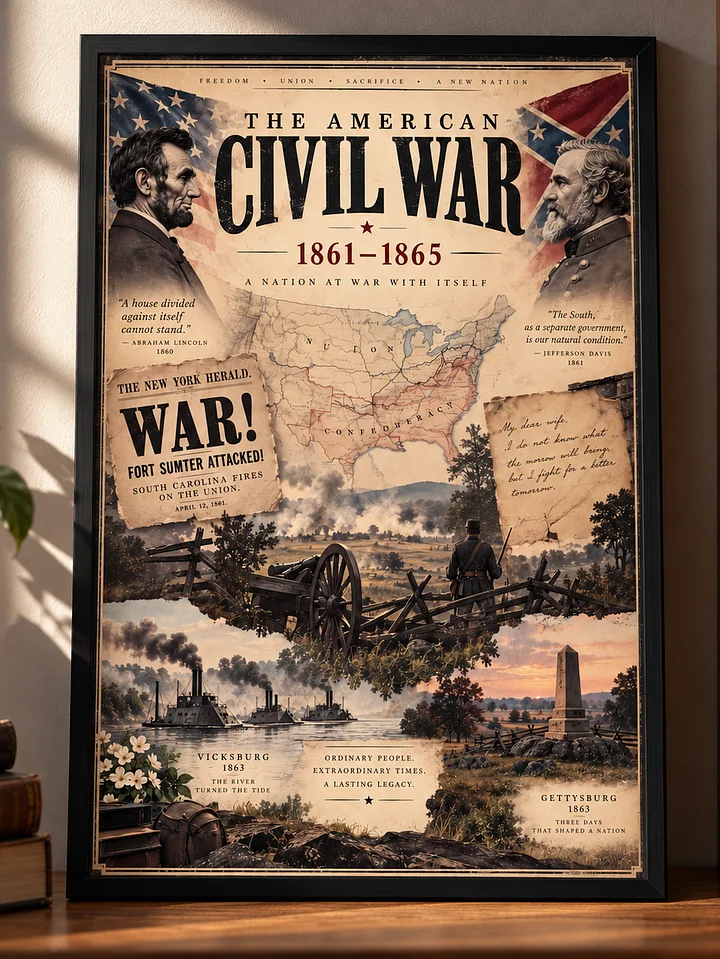
The American Civil War Poster
More than a single battle on the wall. Period flags, a Civil War map, wartime newspaper clippings, and battlefield landscapes layer together into something closer to a visual history than conventional military decor. The engraved-style illustrations and aged paper texture make it feel pulled from an old history library.
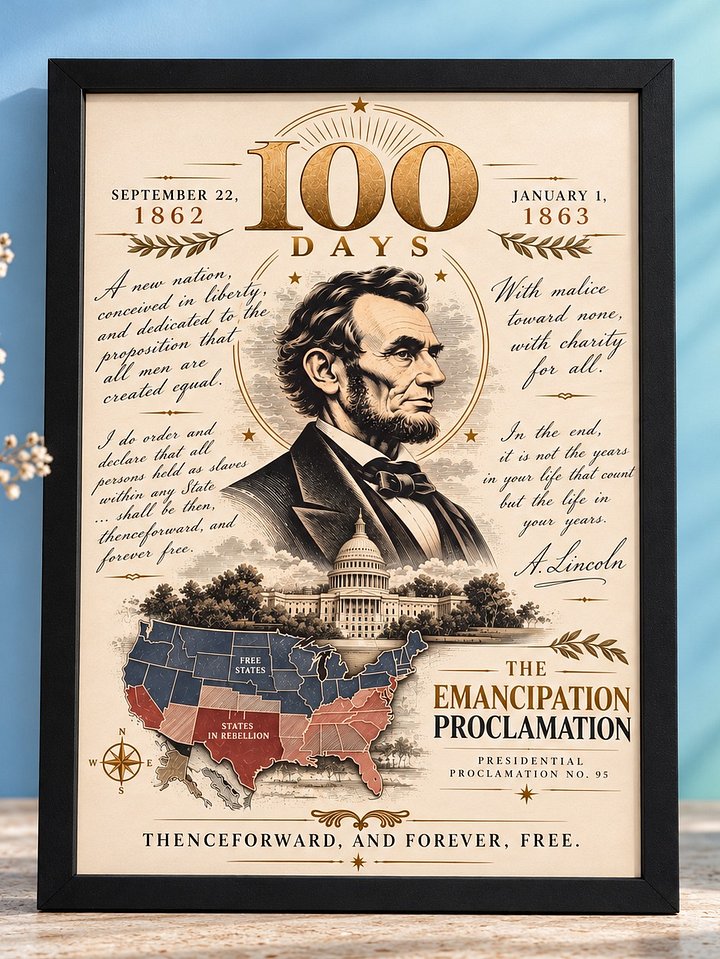
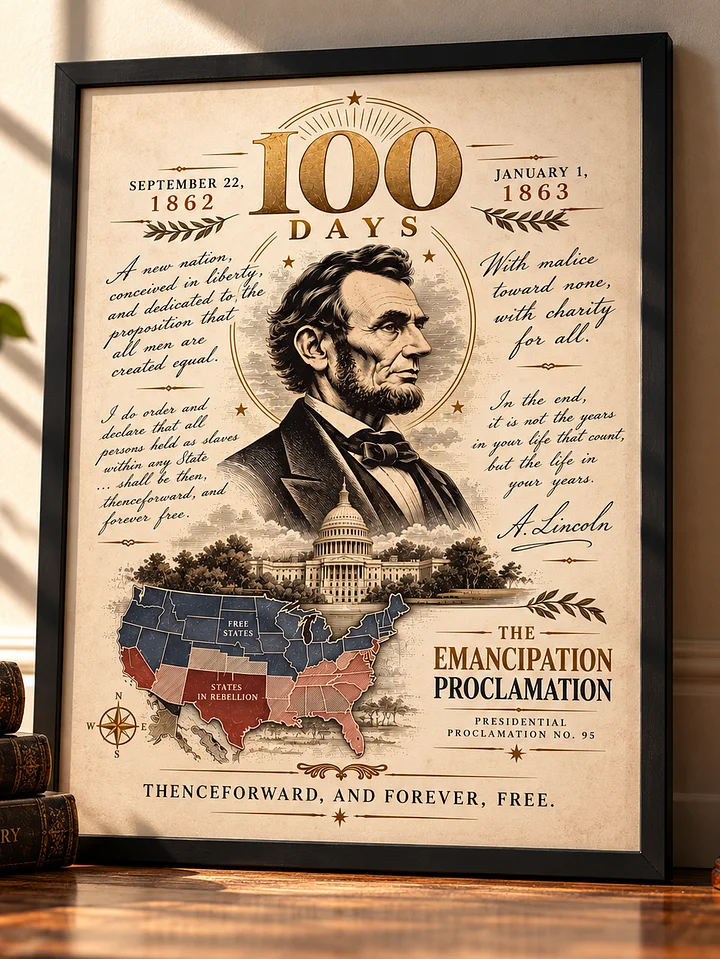
The Emancipation Proclamation Poster
A detailed Lincoln portrait anchors this one, framed by the Capitol and a period-style map separating free states from states in rebellion. It marks the actual sequence of events, the September 1862 preliminary proclamation through the January 1863 Emancipation Proclamation, making it a solid pick for anyone drawn to Lincoln, the Civil War, or emancipation history specifically.
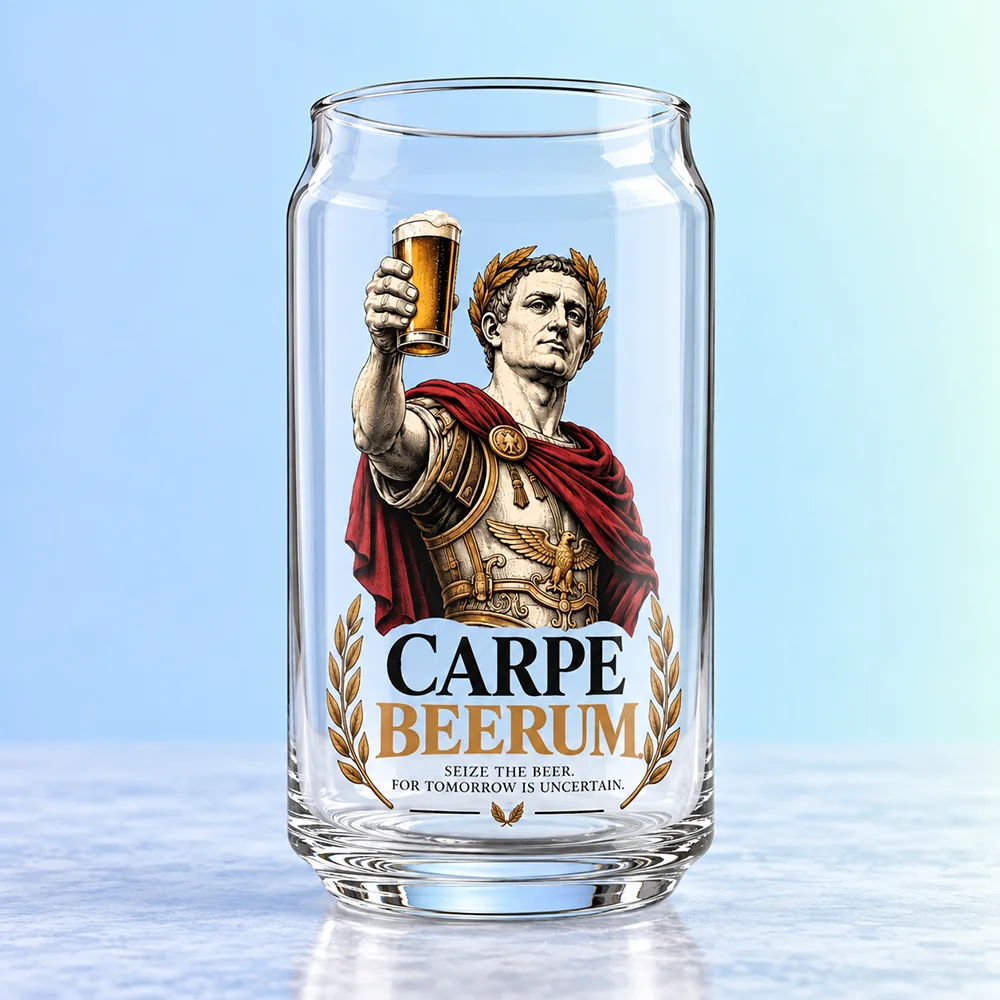
Roman History Inspired Funny Beer Glass
For the history buff who appreciates both Ancient Rome and a good beer, this glass is hard to beat. It features a Roman emperor-inspired figure raising a pint beneath the playful “CARPE BEERUM” design, a tongue-in-cheek twist on carpe diem.
What makes it such a good gift is that it combines a genuine interest in history with something the recipient can actually use. It feels personal without being overly serious, and the classical engraving style gives it more character than a typical novelty beer glass. A particularly fun choice for Roman history enthusiasts, Ancient Rome fans, or anyone who likes their historical references with a little humor.
More History Themed Barware Gift Ideas
Glassware that says something rather than just sitting there. These pull from wartime Britain, ancient Rome, and the Civil War era, each one built for actual use rather than a shelf it never leaves.
Churchill "A Good Beer" WWII Beer Glass
A bit of humor with the history. Churchill raises a pint against a Union Jack backdrop, Spitfires overhead, with a wartime-style message underneath about beer giving strength in dark hours. Themed enough to feel personal, useful enough to actually get poured into.
Historia Magistra Vitae Whiskey Glass
Anyone who's argued about footnotes and rolled their eyes at an oversimplified documentary will get this one. A gold emblem centers on an hourglass and laurel wreath, ringed by the two-thousand-year-old Cicero line that gives the glass its name, history is the teacher of life. It doesn't explain itself, and it doesn't need to.
Civil War Whiskey Glass (1861-1865)
A quiet nod over a loud statement. Crossed rifles and a star sit beneath the years 1861 to 1865 in clean, minimal engraving, built for an evening bourbon or scotch and sturdy enough for regular use on any bar cart or desk.
Finding the Right History Gift
Choosing a gift for a history buff is easier when you start with the person, rather than the product.
If they have a favorite period, lean into it. A Civil War enthusiast might appreciate a journal or piece of Civil War-inspired drinkware, while someone fascinated by ancient Rome might prefer a Roman-themed design. You can also browse our Civil War gifts and Roman history gifts for more designs focused specifically on those periods. For someone whose interests span centuries, a broader history design can be a better fit.
It also helps to think about how they spend their time. Someone who is always reading, researching, or taking notes might get more use from a history journal. Someone who starts every morning with coffee might appreciate a history mug. For the person who likes something they can take everywhere, a water bottle or tumbler makes sense. And if you're shopping for someone whose home office, study, or library is already full of books, a history poster can add something to the room without adding another book to the shelf.
Then there are the gifts that are simply about the joke. A history buff with a dry sense of humor might prefer a witty T-shirt, hoodie, mug, or glass over something strictly educational.
And if you don't know exactly which part of history they love, don't worry too much about getting the century right. Some of the best gifts in this collection are about the love of history itself: the rabbit holes, obscure facts, primary sources, ancient civilizations, old maps, and endless fascination with what happened before us.
The goal isn't to find the most impressive-looking gift. It's to find something that makes the recipient think, “That is very much me.”
Frequently Asked Questions
What are good gifts for history buffs?
Good history gifts depend on what the person enjoys. This collection includes history-themed T-shirts, hoodies, mugs, journals, drinkware, water bottles, tumblers, posters, and other gifts covering subjects such as ancient civilizations, Roman history, the Civil War, WWII, American history, and history more broadly.
What should I get someone who loves a specific period of history?
A gift connected to their favorite period is a natural place to start. Look for designs that reference the era directly, whether that's Ancient Rome, the Civil War, WWII, American history, or another historical period. A specific reference can make the gift feel considerably more personal than a generic history design.
What is a good history gift for someone who already has lots of books?
Consider something that complements their reading rather than adding another book. History journals, mugs, tumblers, posters, clothing, and barware can bring their interest into their everyday surroundings without giving them another volume for the bookshelf.
What are good history gifts for a history teacher?
History-themed mugs, T-shirts, hoodies, journals, and posters can work particularly well for teachers because they combine the subject with something they can actually use or display. Witty designs can also be a good fit for teachers who enjoy historical humor.
What is a good history gift for Dad?
For a dad who loves history, start with the period or subject he talks about most. A Civil War, WWII, Roman, or American history gift can feel more personal than something simply labeled “history.” If you're unsure of his favorite era, a broader history design is a safer choice.
What if I don't know which part of history they like?
Choose something that celebrates the history buff mindset itself rather than a particular era. Designs about historical research, primary sources, ancient civilizations, historical patterns, or a general fascination with the past can work well when you don't know their exact interests.
Are these gifts only for serious history buffs?
No. Some designs are made specifically for people who are deeply into history, while others use historical humor, vintage artwork, or recognizable references that can appeal to someone with a more casual interest.
Are history posters good gifts?
They can be a particularly good choice when you want something that feels more substantial than everyday merchandise. A well-designed history poster can work as wall art for a home office, study, library, classroom, or bedroom, especially when it focuses on a particular period or presents history in a visually interesting way.
What makes a good history gift?
The strongest choice is usually one that connects the person's interests with something they can actually use, wear, or enjoy looking at. A specific historical reference, a well-executed design, or a joke that another history enthusiast would immediately understand can make a simple object feel much more personal.
I need a history gift but I'm not sure what to choose. Where should I start?
Start by asking three questions: What period do they love? What kind of thing would they actually use? And are they more serious, scholarly, or humorous about their interest? Those three answers will usually narrow the choices considerably.